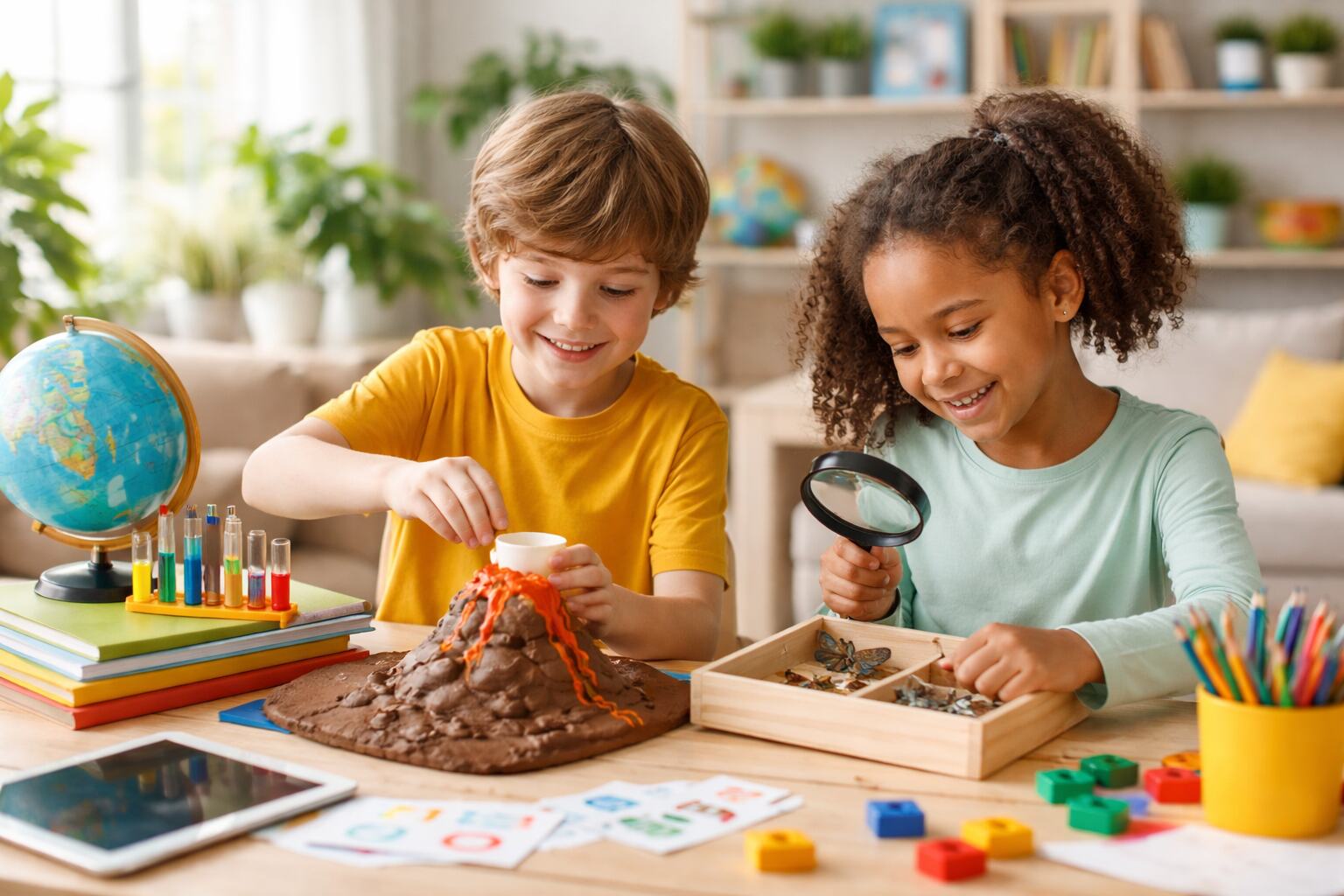

The transformative value of play is often underestimated in the formal educational landscape, yet its most foundational form, pretend play, offers a rich tapestry of learning opportunities. From the simplest imitation of an adult’s actions to complex, imagined scenarios, role play acts as a vital bridge, transitioning fleeting moments of make-believe into enduring, real-world understanding. This article explores the profound benefits of role play across various developmental domains, underscoring its indispensable role in shaping young minds and preparing them for the complexities of life.

Early childhood education is a critical period for laying the groundwork for future academic and social success. During these formative years, children are naturally inclined toward exploration, experimentation, and imaginative engagement. Role play, in its myriad forms, serves as a potent catalyst for this developmental process, offering a safe and stimulating environment for children to practise and internalise a vast array of skills. It is within the realm of pretend play that children begin to make sense of the world around them, testing hypotheses, negotiating rules, and developing a sense of self and others.
Building Social Competence and Cooperative Skills
One of the most significant contributions of role play to early childhood development lies in its ability to foster social competence. When children engage in pretend scenarios, they are inherently practising social interactions. They learn to take turns, share materials, and negotiate roles and storylines. A simple game of ‘house’ might involve one child acting as the parent, another as the child, and perhaps a third as a pet. This requires them to understand different perspectives, communicate their needs and desires, and compromise when disagreements arise. These early experiences in collaborative storytelling and problem-solving build the foundation for more complex social interactions later in life, teaching them invaluable lessons in teamwork and conflict resolution.
Developing Emotional Intelligence and Self-Regulation
Role play also provides a vital playground for the development of emotional intelligence. Children can safely explore a range of emotions – joy, sadness, anger, excitement – in the context of their imaginary roles. They might enact a situation where a character is upset and learn how to comfort them, or they might experience frustration in their play and have to find ways to manage it. This process of emotional exploration and enactment is vital for cultivating self-awareness and empathy. By stepping into the shoes of different characters, children begin to understand that others have feelings and motivations that may differ from their own, a cornerstone of emotional maturity and the ability to regulate their own emotional responses.
Beyond its social and emotional dividends, role play is a formidable tool for cognitive development. The act of pretending requires children to think abstractly, to represent concepts and objects in their minds, and to engage in complex problem-solving. This mental dexterity is cultivated through the imaginative scenarios they construct and navigate.
Stimulating Problem-Solving and Critical Thinking
When children engage in role play, they are not merely mimicking actions; they are actively solving problems within their created worlds. A scenario where a ‘doctor’ has to ‘cure’ a ‘sick patient’ involves diagnosing the ailment, deciding on the ‘treatment’, and understanding the consequences of their actions. This necessitates a form of critical thinking, where they must reason, strategise, and adapt their play based on the responses of others or the evolving narrative. They learn to think on their feet, to hypothesise about outcomes, and to devise solutions, all crucial skills for academic success and life challenges.
Enhancing Memory and Information Processing
The act of remembering roles, storylines, and the rules of engagement within a pretend play scenario significantly strengthens a child’s memory and information processing abilities. Children must recall character traits, plot points, and the established framework of their game. This repeated retrieval and application of information helps to solidify their understanding and makes them more adept at recalling and utilising information in other contexts. Whether remembering the ingredients for a pretend cake or the mission of a superhero, these mental exercises are building robust cognitive networks.
The connection between pretend play and the development of language and literacy skills is profound and undeniable. Role play provides a rich, context-driven environment where children naturally practise and expand their verbal abilities, laying a strong foundation for reading and writing.
Expanding Vocabulary and Communication Skills
Children constantly encounter new vocabulary and opportunities to utilise language meaningfully in the dynamic realm of role play. When playing ‘shop’, they might learn words related to food, money, and customer service. As a ‘teacher’, they might use instructional language. The need to communicate their ideas, convey instructions, and engage in dialogue with their peers naturally drives them to expand their vocabulary and refine their sentence structures. They learn to articulate their thoughts, listen attentively to others, and respond appropriately, all essential components of effective communication.
Developing Narrative Skills and Story Comprehension
Role play inherently involves storytelling. Children create narratives, develop characters, and follow plotlines. This process of constructing and experiencing stories cultivates strong narrative skills. They learn about story structure, the concept of a beginning, middle, and end, and the importance of character development. This familiarity with the elements of a story directly translates into improved comprehension when they encounter written narratives, making them more adept at understanding plot, identifying characters, and inferring meaning from text.
Perhaps one of the most widely recognised benefits of role play is its unparalleled ability to nurture creativity and imagination. In a world that often prizes conformity, pretend play offers a sanctuary for unique thought and boundless invention.
Cultivating Divergent Thinking and Innovation
Role play fosters children’s ability to think creatively and approach situations from various viewpoints. Simple props, like a cardboard box, can transform into a car, a house, a ship, or a rocket when given to children. This ability to see possibilities beyond the obvious is the essence of divergent thinking, a critical skill for innovation and problem-solving in all areas of life. They are not bound by the actual function of an object but by their imaginative potential, leading to unique and personal creations.
Encouraging Originality and Self-Expression
Through role play, children have the freedom to create their own worlds, invent characters with unique personalities, and devise original storylines. This process of creative construction allows for profound self-expression. They can explore their desires, fears, and aspirations through their characters, giving voice to their inner worlds. This fosters a sense of individuality and confidence in their ideas and abilities, empowering them to be original thinkers and resourceful individuals.
The journey from pretend play to real learning is solidified when children begin to understand how their imaginative scenarios translate into practical skills and deeper empathy for others. Role play acts as a safe training ground for navigating the complexities of everyday life.
Practicing Real-World Scenarios and Problem-Solving
Role play allows children to safely rehearse real-world situations without the genuine consequences. Playing “doctor’ helps them understand the procedures and interactions involved in a medical visit, potentially reducing anxiety. Pretending to ‘cook’ a meal teaches them about following steps and using tools. These simulated experiences equip them with a sense of familiarity and competence, making them more prepared to handle similar situations when they arise in real life. They learn to anticipate challenges and develop strategies for overcoming them.
Developing Empathy and Understanding Different Perspectives
Stepping into the shoes of another person, whether it’s a character in a story or a community helper, is a powerful exercise in empathy. When children role-play as a firefighter, they might begin to understand the bravery and responsibility associated with that profession. By enacting the role of someone who is different from themselves, they gain invaluable insight into diverse experiences and perspectives. This practice in imagination and understanding fosters compassion and a greater appreciation for the complexities of human interaction, promoting a more inclusive and understanding worldview.
To fully harness the power of role play, educators must thoughtfully integrate it into their curriculum. This requires a strategic approach that goes beyond unstructured playtime and intentionally designs opportunities for deep learning.
Creating Rich and Stimulating Play Environments
Effective role-play integration begins with the creation of stimulating environments. This involves providing various open-ended materials – blocks, dress-up clothes, props related to different professions or themes – that encourage imagination. Educators should also consider creating dedicated play spaces that can be easily transformed to suit different role-play scenarios, such as doctor’s offices, grocery stores, or construction sites. The environment itself should invite exploration and creative engagement.
Facilitating and Scaffolding Play Experiences
Educators play a crucial role in facilitating and scaffolding role play. This doesn’t mean directing the play, but rather observing, asking open-ended questions to prompt deeper thinking, and providing gentle guidance when needed. For instance, if children are struggling to develop a storyline, an educator might ask, “What do you think needs to happen next?” or “How does that character feel about this situation?” Scaffolding involves supporting children as they expand their play, helping them to articulate their ideas, and introducing new vocabulary or concepts to enrich their experiences.
Connecting Role Play to Learning Objectives and Assessment
Role play should not be seen as a separate activity from the curriculum but rather as a powerful tool for achieving learning objectives. Educators can design role-play scenarios that directly align with specific curriculum topics, whether it’s understanding historical events, learning about scientific concepts, or exploring social studies themes. Assessment in role play can be observational, focusing on children’s participation, their ability to communicate and collaborate, their problem-solving strategies, and their understanding of the concepts being explored within the play.
The benefits of role play are particularly pronounced in special education, where it can serve as a highly effective therapeutic and educational tool for children with diverse learning needs.
Providing Opportunities for Social Skill Development
For children who struggle with social interaction, role play offers a safe and structured environment to practise essential social skills. Through guided role-play scenarios, they can learn to initiate conversations, make eye contact, understand social cues, and respond appropriately in different social situations. This can significantly reduce anxiety and build confidence in their ability to connect with others.
Enhancing Communication and Language Skills for Diverse Learners
Role play is a powerful avenue for developing communication and language skills for children with various communication challenges. It provides a functional context for using language, helping them to generalise vocabulary and practise expressive and receptive language skills. For children with limited verbal abilities, role play can be adapted to incorporate non-verbal communication, gestures, and visual aids, ensuring all learners can participate and benefit.
The efficacy of role play in educational settings is well-supported by extensive research, and a growing body of best practices guides its implementation. Research consistently highlights the positive impact of role play on a wide range of developmental outcomes, from cognitive flexibility to emotional regulation and social problem-solving.
Evidence-Based Benefits and Longitudinal Studies
A multitude of studies indicate that children who participate in regular pretend play display improved executive functions, such as planning, self-regulation, and working memory. Longitudinal research has also indicated that early experiences with imaginative play are predictive of later academic success and social competence. This evidence points out the fundamental importance of role play in a child’s overall development.
Innovative Approaches and Future Directions
Current best practices in role-play integration emphasise creating child-centred, play-based learning environments that foster collaboration and inquiry. Innovative approaches include the use of technology to enhance role-play experiences, the development of culturally responsive role-play scenarios, and the incorporation of dramatic play into STEM education. As research continues to explore the multifaceted benefits of role play, educators are increasingly recognising its power as a dynamic and indispensable pedagogical tool, essential for nurturing well-rounded, capable, and imaginative individuals. The journey from pretending to understanding is a continuous one, with role play as the vital and enriching conduit.