
5 Educational Puzzles That Will Supercharge Your Brain Development
The human brain, a marvel of biological engineering, possesses an incredible capacity for growth and adaptation throughout life. This plasticity is fundamental to learning and cognitive function, as it allows the brain to reorganise itself by forming new neural connections. While many activities contribute to a healthy and developing brain, educational puzzles stand out as particularly potent tools. They offer a different type of challenge, engagement, and reward, actively stimulating neural pathways and fostering a more robust cognitive landscape.
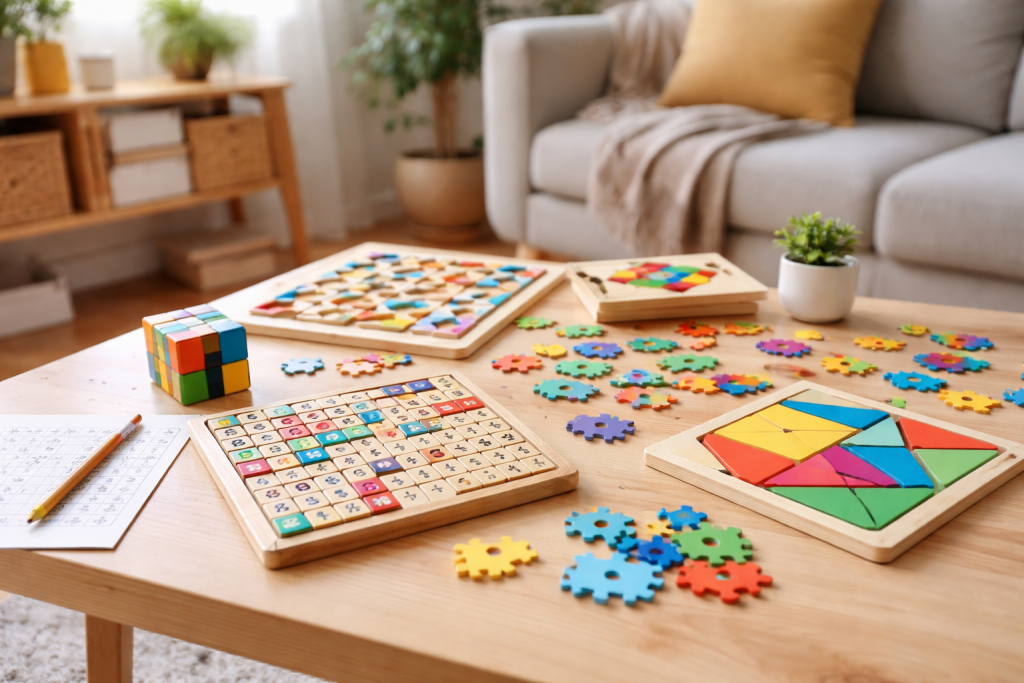
Contents
- 1 The Multifaceted Benefits of Educational Puzzles for Brain Development
- 2 The Crucial Role of Educational Puzzles in Sharpening Problem-Solving Abilities
- 3 The Profound Impact of Educational Puzzles on Memory and Concentration
- 4 The Intricate Relationship Between Educational Puzzles and Critical Thinking
- 5 The Future of Educational Puzzles in Brain Development Research and Innovation
The Multifaceted Benefits of Educational Puzzles for Brain Development
Educational puzzles are far more than mere pastimes; they are intricate exercises designed to engage and stimulate various areas of the brain. Their inherent structure requires players to analyse information, identify patterns, and devise strategies, which directly contributes to enhanced cognitive function. This isn’t just about memorising facts; it’s about building the underlying mental machinery that allows for more effective learning and problem-solving across all domains of life.
Strengthening Cognitive Skills with Puzzles
The benefits of educational puzzles permeate a wide spectrum of cognitive skills. When engaging with a puzzle, one is actively participating in a mental workout that strengthens fundamental abilities. This engagement directly translates into improved performance in academic pursuits, professional challenges, and everyday decision-making.
Visual-Spatial Reasoning Enhancement
Many puzzles, from jigsaw jigsaws to spatial reasoning challenges, demand the manipulation of objects in one’s mind. This process hones visual-spatial skills, enabling individuals to better understand and interact with their physical environment, which is crucial for subjects like geometry and engineering, as well as for practical tasks like navigating and assembling objects.
Logical Deduction and Pattern Recognition
The very essence of most puzzles lies in identifying patterns and making logical deductions. Whether it’s deciphering a Sudoku grid, solving a logic puzzle, or assembling a complex sequence, people are constantly practicing the art of connecting seemingly disparate pieces of information to arrive at a coherent conclusion. This skill is transferable to virtually every field of study and work.
The Crucial Role of Educational Puzzles in Sharpening Problem-Solving Abilities
At their core, educational puzzles are problem-solving engines. They present a defined challenge with a specific goal, and the journey to achieving that goal is paved with a series of smaller problems that must be overcome. This continuous cycle of problem identification, analysis, and solution-finding is what makes puzzles so effective in developing this critical life skill.
Developing Strategic Thinking and Planning
To successfully complete most educational puzzles, a degree of foresight and strategic planning is required. Players must consider potential outcomes, anticipate obstacles, and devise a step-by-step approach. This approach cultivates the ability to think ahead, to weigh options, and to develop effective strategies, skills that are invaluable for tackling complex issues.
Fostering Resilience and Perseverance
Not all puzzles are solved immediately. Many require persistence, experimentation, and the willingness to learn from mistakes. This journey teaches individuals to persevere in the face of difficulty, to adapt their strategies when they aren’t working, and to develop a sense of accomplishment upon finally overcoming the challenge. Resilience is a cornerstone of success in any endeavour.
The Profound Impact of Educational Puzzles on Memory and Concentration
In an age of constant digital distraction, the ability to focus and retain information is more vital than ever. Educational puzzles offer a unique and engaging method for actively strengthening these cognitive faculties. Their inherent demand for sustained attention and the process of encoding and recalling information makes them powerful allies in the quest for enhanced memory and concentration.
Improving Working Memory Capacity
Many puzzles require individuals to hold and manipulate multiple pieces of information simultaneously. This directly exercises and expands working memory, the cognitive system responsible for temporarily storing and processing information. A robust working memory is essential for understanding complex instructions, following multi-step reasoning, and engaging in higher-level cognitive tasks.
Enhancing Sustained Attention Span
The act of engaging with a puzzle, especially a more complex one, necessitates sustained focus. Players must resist distractions and dedicate their attention to the task at hand. Over time, this consistent practice can lead to a significant improvement in their ability to concentrate for extended periods, a benefit that extends far beyond the puzzle itself and into academic and professional settings.
The Intricate Relationship Between Educational Puzzles and Critical Thinking
Critical thinking—the ability to analyse information objectively and make reasoned judgments— is a cornerstone of intellectual development. Educational puzzles are fertile ground for cultivating this crucial skill, encouraging a deeper level of engagement with information than rote memorisation.
Encouraging Questioning and Hypothesis Formation
As individuals grapple with a puzzle, they are naturally prompted to ask questions: “How does this piece fit?”, “What is the underlying rule here?”, and “What happens if I try this?” This process of questioning and forming hypotheses, even if implicitly, is the very foundation of critical inquiry.
Promoting Analysis and Evaluation
Puzzles often require the analysis of various components and the evaluation of their relationships. Players must dissect the problem, understand the parameters, and assess the potential consequences of their actions. This analytical approach, honed through puzzle-solving, is directly applicable to evaluating arguments, identifying biases, and making informed decisions.
The Future of Educational Puzzles in Brain Development Research and Innovation
The recognised efficacy of educational puzzles in fostering cognitive development is not merely anecdotal; it is increasingly supported by scientific research. As our understanding of the brain’s plasticity and learning mechanisms deepens, the role of tailored and engaging cognitive tools like educational puzzles is poised to expand dramatically.
Personalized Learning Through Adaptive Puzzles
Future innovations in educational puzzles are likely to focus on adaptive technologies. These puzzles could dynamically adjust their difficulty and focus based on an individual’s performance, providing a truly personalised learning experience that targets specific areas for development and prevents frustration or boredom.
Integration with Neuroscience and AI
The integration of educational puzzles with advancements in neuroscience and artificial intelligence holds immense promise. AI algorithms could analyse an individual’s puzzle-solving patterns to provide more nuanced feedback and develop even more effective, targeted brain-training exercises. This could lead to breakthroughs in addressing learning disabilities and cognitive decline.
Educational puzzles provide profound benefits, enhancing problem-solving abilities, sharpening critical thinking, and improving memory, making them invaluable tools for individuals of all ages. Whether they are complex logic challenges, engaging spatial reasoning games, or stimulating word puzzles, their power to supercharge brain development is undeniable. By actively incorporating these engaging activities into our lives, we invest in a sharper, more resilient, and more capable mind, fostering a lifelong journey of learning and cognitive well-being.
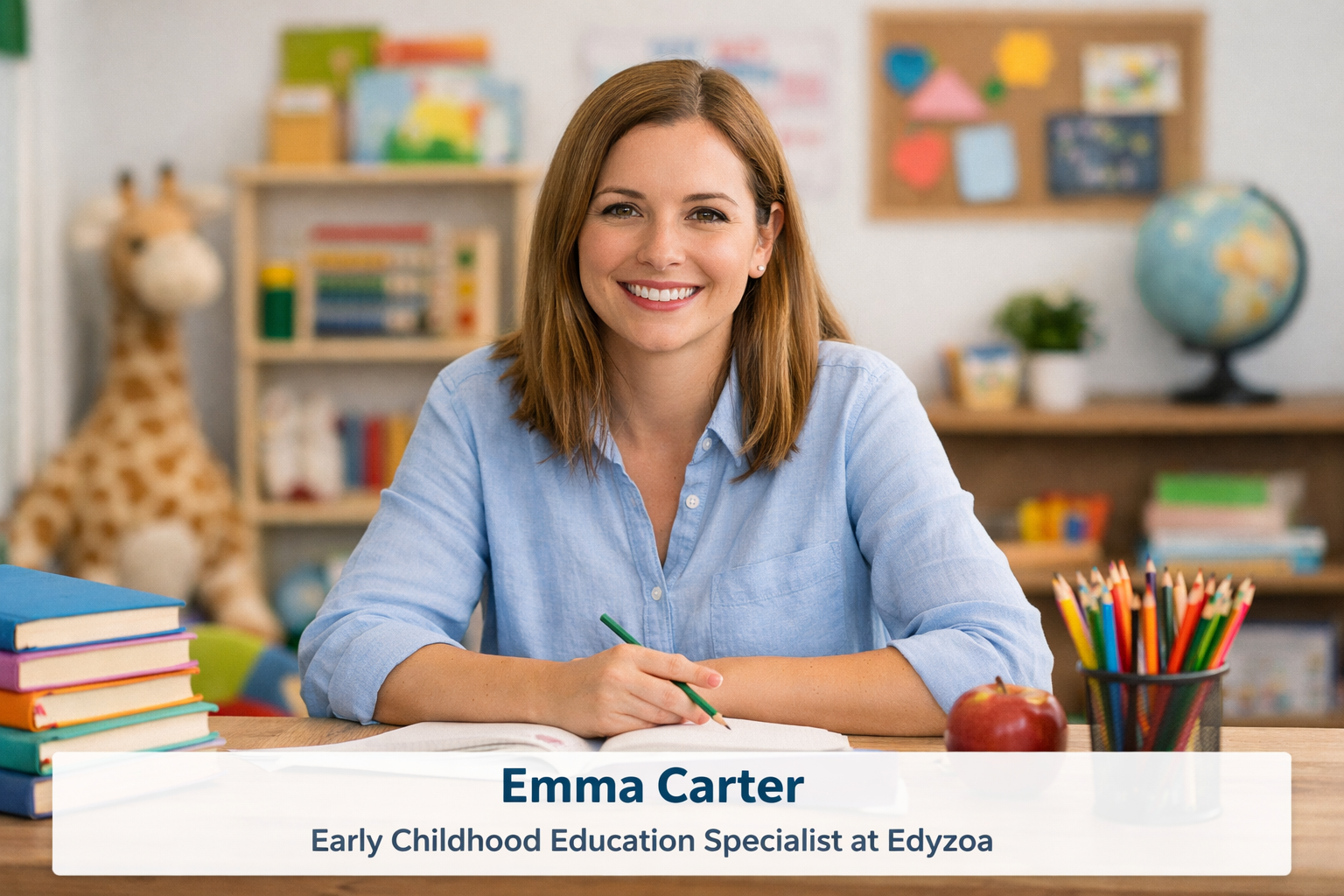
Emma Carter is an early childhood education enthusiast and content creator at Edyzoa. She is passionate about helping children learn through fun, engaging, and safe educational resources that support creativity, curiosity, and skill development.