Time, a ubiquitous and often abstract concept, governs our lives from the moment we wake until we drift to sleep. For adults, it’s a constant, albeit sometimes a baffling one. For children, however, time can be a bewildering enigma. Its invisible currents dictate their mealtimes, bedtimes, and playtimes, yet its fundamental mechanisms remain largely a mystery. Helping children grasp the intricacies of time – from its basic measurement to its profound impact on their lives – is a crucial part of their cognitive development and an invaluable life skill. This guide aims to equip parents with the tools and insights to make this journey both educational and engaging.
Before children can tell time on a clock, they need a foundational understanding of what time actually is. This begins with acknowledging the natural rhythms of the world around them.
Introducing Basic Time Concepts Through Nature
The rising and setting sun, the phases of the moon, and the changing seasons are excellent starting points. Point out how the sun goes “up” in the morning and “down” at night, bringing with it different activities and light levels. Discuss how different animals are active at different times of the day. As seasons change, talk about how some activities are only possible in summer (like swimming outdoors) or winter (like building a snowman). These observations lay the groundwork for understanding the progression and cyclical nature of time.
Differentiating Between “Now”, “Later”, and “Before”
Young children primarily live in the present moment. Introducing terms like “now”, “later”, and “before” helps them begin to sequence events. “We are playing now. We will eat lunch later. We brushed our teeth before we came to the park.” Consistency in using these terms within daily conversations reinforces their meaning and helps children develop a nascent sense of order in their day.
The Flow of Time: A Gentle Introduction
While a truly abstract understanding of time’s ceaseless flow is beyond young children, we can introduce the idea that time is always moving forward. Comparing it to a river that never stops flowing or a story that keeps unfolding can be a helpful analogy for slightly older children. Avoid overwhelming them with complex philosophical ideas; the goal at this stage is simply to acknowledge its continuous movement.
Once a basic conceptual understanding is in place, the practical skill of telling time on a clock becomes more accessible. This process should be gradual and playful.
Starting with Analog Clocks: The Hands and the Numbers
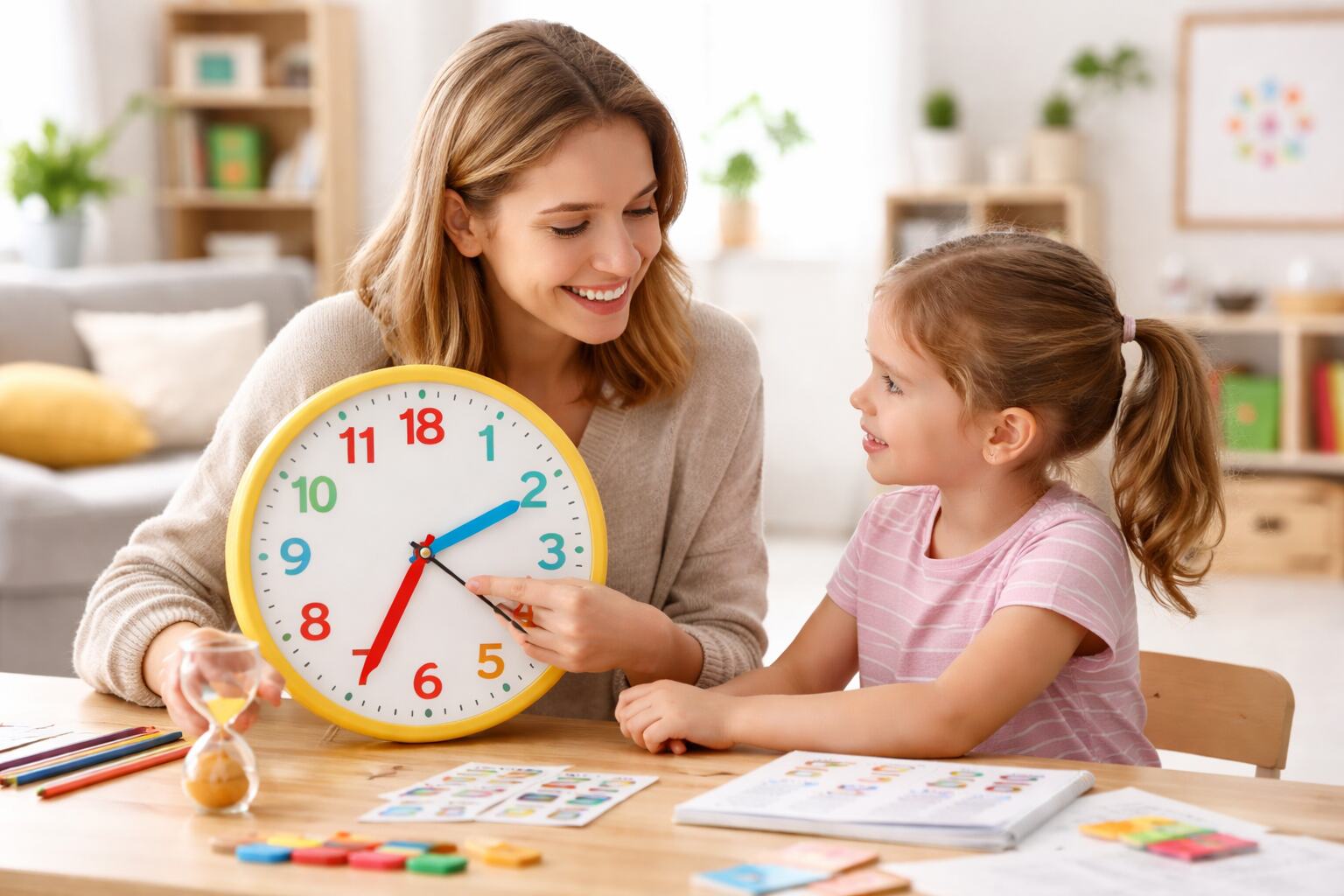
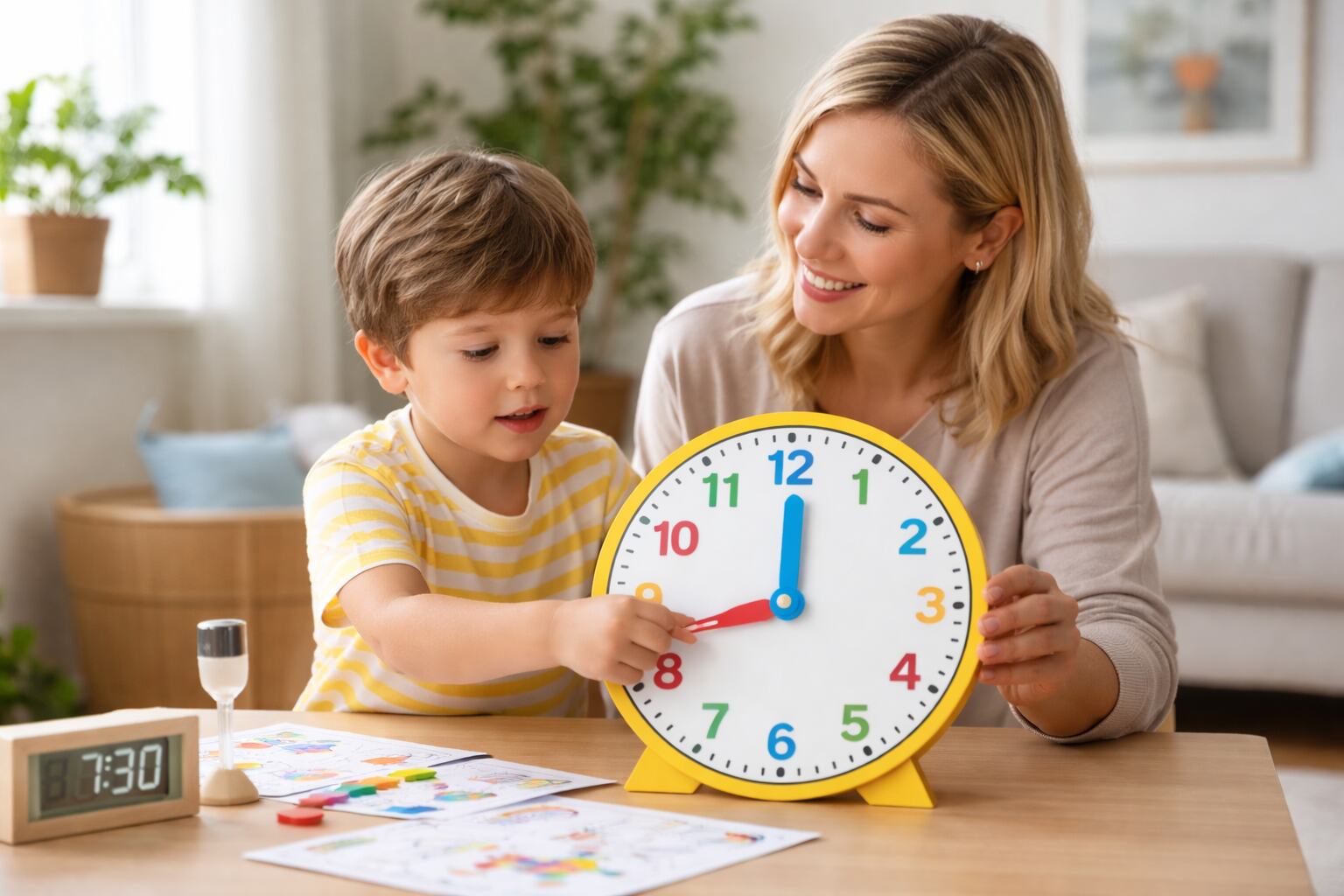
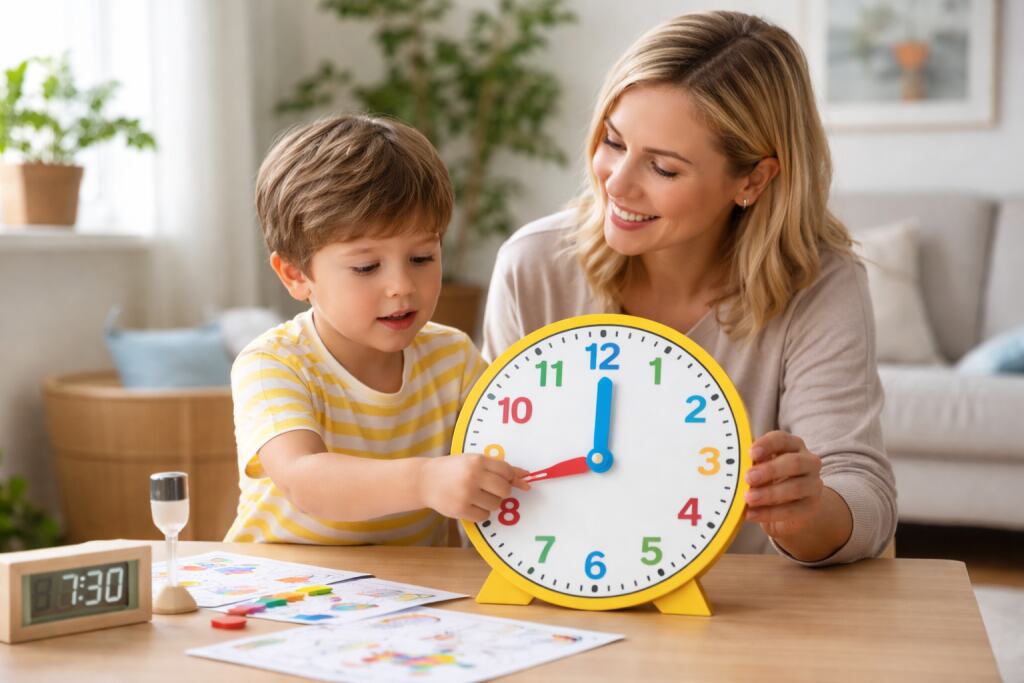
Begin with an analogue clock, as its visual representation of movement is more intuitive than a digital display. Explain the function of the hour hand (the short, slow one) and the minute hand (the long, faster one). Use a practice clock with movable hands and allow children to manipulate them. Start by focusing on the hour hand, teaching them to identify the hour when the minute hand is pointing directly at the 12 (o’clock).
Mastering Minutes: Counting by Fives
Once hours are understood, introduce minutes. Explain that the numbers on the clock also represent groups of five minutes. Practice counting by fives around the clockface. “One, two, three, four, one o’clock! Practice counting by fives around the clock face. Use visual aids, such as a clock face with the minute numbers (5, 10, 15, etc.) written on it, to reinforce this concept.
Digital Clocks: Connecting Analog to Digital
After a solid grasp of analogue time, introduce digital clocks. Explain that the first number represents the hour and the second represents the minutes. Help them see the connection between “three thirty” on an analogue clock and “3:30” on a digital one. Practice switching between the two formats to solidify their understanding.
Time-Telling Games and Activities
Make learning to tell time fun! Use time-telling flashcards, play “What time is it, Mr Wolf?” with a clock, or create a scavenger hunt where clues are given in terms of specific times. Board games that involve time-telling can also be a fantastic resource.
Routines are powerful teaching tools, effectively demonstrating the practical application of time. They provide structure and predictability, allowing children to anticipate events and understand their sequential order.
Creating a Visual Schedule
For younger children, a visual schedule with pictures or drawings of daily activities (waking up, breakfast, school, playtime, dinner, bedtime) can be incredibly helpful. As they get older, introduce words and eventually times to these activities. This visual representation allows them to “see” their day unfold and grasp the concept of sequence.
Incorporating Timers for Transitions
Timers are excellent for establishing boundaries and managing transitions. “You have five more minutes of playtime before it’s time to clean up.” “We’ll leave for school in ten minutes.” This helps children internalise the duration of activities and prepare for changes. It also gives kids a sense of duty as they learn to respond to time cues.
Discussing the Length of Activities
Engage children in conversations about how long different activities take. “How long do you think it will take us to walk to the park?” “How long does it take to eat dinner?” This helps them develop an internal clock and make more realistic estimations about time.
Beyond telling time, truly understanding its nature involves grasping its temporal dimensions: past, present, and future. This introduces a more complex yet vital aspect of time comprehension.
Recalling Past Events and Anticipating Future Ones
Encourage children to talk about what they did “yesterday” or “last week” and what they plan to do “tomorrow” or “next weekend.”. Using family photos to reminisce about past events (birthdays, vacations) helps solidify the concept of “before” and “then.”. Similarly, discussing upcoming events, like holidays or special outings, builds anticipation and understanding of “later” or “soon.”
Storytelling and Time Progression
Narrative is a powerful tool. When reading stories, discuss the sequence of events. “First, the little bear woke up. Then, he ate his breakfast. After that, he went for a walk.” This sequential unpacking of stories helps them understand how events unfold over time. Encourage them to create their own stories, paying attention to the order of occurrences.
The Concept of History: A Gentle Introduction
For older children, a basic introduction to history can be fascinating. Discuss how things were “long, long ago” compared to “now.” Look at old photographs of relatives or objects from different eras. This exercise broadens their perspective on time beyond their immediate experience and introduces the idea of a distant past.
Understanding how humans have tracked time adds another layer of appreciation and context. It also opens the door to the role of technology in our modern timekeeping.
From Sundials to Atomic Clocks
Introduce the idea that humans haven’t always had clocks. Briefly explain how early civilisations used the sun (sundials), water (water clocks), or sand (sandglasses) to measure time. These activities can be done through simple pictures or even attempting to make a basic sundial on a sunny day. For older children, a quick overview of pendulum clocks and eventually modern quartz and atomic clocks highlights the evolution of precision timekeeping.
Modern Technology and Time
Discuss how technology impacts our perception and measurement of time. Point out the clocks on phones, computers, and smart devices. Explain how these devices constantly track time and how they help us stay organised and connected.
Digital Tools for Learning Time
There are numerous apps and online games specifically designed to teach children about time. These can be excellent supplementary resources, offering interactive exercises and engaging visuals that reinforce learning. However, it’s important to balance screen time with hands-on learning.
Play is a child’s natural language, and integrating time concepts into their play makes learning effortless and enjoyable.
Pretend Play with Schedules and Appointments
Encourage pretend play scenarios where time is a factor. Playing “doctor” or “teacher” can involve setting appointments or creating class schedules. Playing “restaurant” could involve discussing when the food will be ready.
Board Games and Puzzles with Time Elements
Many board games require players to wait for their turn, which implicitly teaches sequencing and patience. Some games explicitly involve moving a clock hand or estimating time durations. Puzzles where pieces need to be placed in a specific order also subtly reinforce the concept of sequence and progression.
“Race the Clock” Challenges
Simple, age-appropriate “race the clock” challenges can make mundane tasks more exciting. “Can you put away all your toys before the timer rings?” This introduces a fun element of urgency and helps children understand the concept of a time limit.
Beyond understanding how time works, children need to learn why managing it effectively is important. Punctuality and good time management are essential life skills.
The Value of Being on Time
Explain why being on time is respectful of others and helps maintain order. “If we are late for school, we miss the beginning of the lesson. If we are late for a playdate, our friend has to wait.” Use real-life examples and emphasise the positive outcomes of punctuality – not just avoiding negative consequences.
Planning and Prioritizing Tasks
As children get older, involve them in simple planning. “What do you need to do before you can play? First, homework, then clean your room.” Help them break down larger tasks into smaller, manageable steps and estimate the time each step might take. This lays the groundwork for effective time management.
The Consequences of Poor Time Management
Gently discuss the natural consequences of not managing time well. Missing out on an activity because too much time was spent on something else, or feeling rushed because a task was left until the last minute, can be powerful learning experiences. Frame these discussions as opportunities for growth rather than reprimands.
Connecting time to personal aspirations can be a powerful motivator and helps children understand its long-term significance.
Setting Short-Term and Long-Term Goals
Help children set simple, achievable goals. “I want to learn to ride my bike without training wheels by summer.” “I want to finish this book by the end of the week.” Discuss the steps needed to achieve these goals and how consistent effort over time leads to progress.
The Concept of Patience and Persistence
Explain that many worthwhile achievements require time, patience, and persistence. Learning a new skill, mastering an instrument, or building something complex all involve sustained effort over time. Share examples from your own life or from stories of people who achieved great things through dedication.
Time as a Resource
Introduce the idea that “time is a precious resource.” Just like money or toys, it can be used wisely or wasted. Encourage children to think about how they spend their time and make conscious choices about activities that align with their interests and goals.
Ultimately, the goal is to foster a healthy, balanced perspective on time, one that acknowledges its importance without creating unnecessary stress.
The Importance of Downtime and Relaxation
Just as structured time is important, so is unstructured time. Emphasise the value of downtime, free play, and relaxation. Explain that our brains and bodies need breaks to recharge and that not every moment needs to be filled with an activity.
Being Present and Mindful
Encourage children to cherish the present moment. Point out the beauty in everyday occurrences, the joy of a shared meal, or the wonder of nature. Such awareness counteracts the tendency to constantly rush to the next thing and helps them appreciate “now.”
The Unstoppable March of Time: Acceptance
While we can manage our activities within time, we cannot stop or reverse its flow. Helping children understand that time moves forward and that changes are a natural part of life fosters resilience and adaptability. Embrace the passage of time as a journey of growth and discovery.
Teaching children about time is an ongoing process, evolving as they grow and mature. By making it a natural part of daily life, through playful exploration, practical application, and thoughtful discussion, parents can help their children develop a profound and healthy understanding of this fundamental aspect of existence.