
Unlocking Your Child’s Potential: Proven Strategies for Improving Communication Skills
Unlocking a child’s full potential hinges significantly on their ability to communicate effectively. From their first cries to complex discussions, communication serves as the fundamental building block for learning, social interaction, and emotional well-being. Understanding its paramount importance and actively nurturing these skills are crucial steps for every parent and carer.
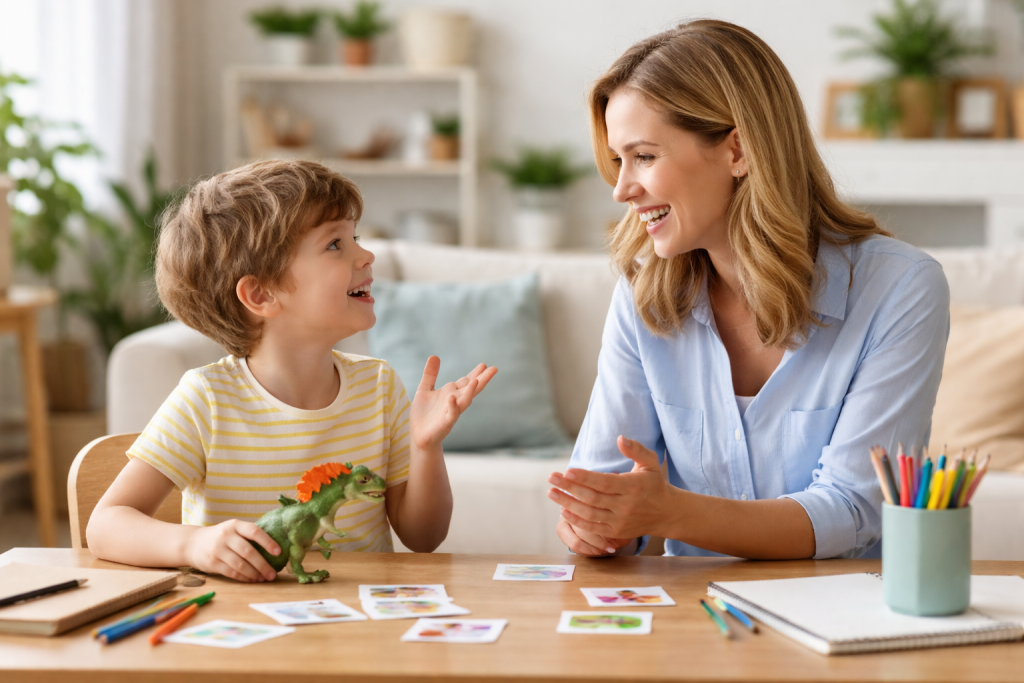
Communication is far more than just speaking; it encompasses listening, understanding non-verbal cues, expressing emotions, and engaging in reciprocal interactions. For children, mastery of these skills is intrinsically linked to their cognitive, social-emotional, and academic development.
Contents
- 1 The Foundation for Cognitive Growth
- 2 Building Blocks for Social-Emotional Well-being
- 3 Academic Success and Future Opportunities
- 4 Recognizing Developmental Milestones and Red Flags
- 5 Seeking Professional Guidance and Assessment
- 6 Understanding Common Communication Disorders
- 7 Establishing Regular Communication Routines
- 8 Fostering a Language-Rich Home
- 9 Encouraging Open Dialogue and Active Participation
- 10 The Power of Imaginative Play
- 11 Engaging in Co-operative Games and Turn-Taking Activities
- 12 Storytelling and Narrative Development
- 13 Recognizing and Praising Efforts
- 14 Providing Opportunities for Success
- 15 Minimizing Criticism and Fostering a Growth Mindset
The Foundation for Cognitive Growth
A child’s ability to vocalise their thoughts, ask questions, and engage in dialogue directly fuels their cognitive development. Through communication, they learn about the world around them, process information, and develop critical thinking skills. They can articulate their observations, test hypotheses, and internalise new concepts, making communication an active learning tool rather than a passive byproduct of development. Children who can effectively communicate their needs and understanding are better positioned to assimilate new knowledge and engage with educational content.
Building Blocks for Social-Emotional Well-being
Strong communication skills are the bedrock of healthy social-emotional development. Children use communication to form friendships, resolve conflicts, express their feelings, and understand the perspectives of others. The ability to articulate their joy, frustration, or sadness allows them to process emotions constructively and prevents bottled-up feelings that can lead to behavioural issues. Conversely, children who struggle to communicate often experience feelings of isolation, anxiety, and misunderstanding, impacting their self-esteem and social integration. Learning to communicate respectfully and assertively is also a vital life skill that cultivates empathy and fosters positive relationships.
Academic Success and Future Opportunities
In the academic setting, effective communication is non-negotiable. Children need to comprehend instructions, participate in discussions, present ideas, and collaborate with peers and teachers. Early proficiency in communication sets the stage for reading comprehension, written expression, and oral presentation skills – all essential for academic achievement. Looking beyond the classroom, communication skills are consistently cited as a top attribute employers seek. Preparing children with robust communication abilities is an investment in their future career prospects and overall success in an increasingly interconnected world.
While every child develops at their own pace, some may encounter specific challenges in their communication journey. Early identification and intervention are key to setting them on a path toward improved proficiency.
Recognizing Developmental Milestones and Red Flags
Parents should familiarise themselves with typical communication milestones for different age groups. While variations exist, significant delays in babbling, speaking first words, forming sentences, or understanding simple commands can be indicators of underlying issues. Other red flags might include a limited vocabulary compared to peers, difficulty following instructions, frequent misinterpretations of social cues, or persistent struggles in expressing thoughts and feelings. Observing these patterns closely and maintaining open communication with paediatricians and educators is crucial for timely assessment.
Seeking Professional Guidance and Assessment
If concerns arise, consulting with a speech-language pathologist (SLP) is a proactive step. SLPs are trained to assess a child’s communication abilities comprehensively, identifying specific areas of difficulty such as articulation, language comprehension, expressive language, or social communication. A thorough assessment can pinpoint the root cause of the challenges, be it a hearing impairment, developmental delay, or a specific language disorder. Early diagnosis allows for targeted intervention strategies, which are often more effective when initiated during critical developmental windows.
Understanding Common Communication Disorders
Communication disorders can manifest in various ways. Articulation disorders involve difficulty producing specific sounds correctly. Language disorders can affect a child’s ability to understand language (receptive language) or to express themselves (expressive language). Social communication disorders, often associated with autism spectrum disorder, involve challenges in using language appropriately in social contexts, understanding non-verbal cues, and engaging in reciprocal conversations. Stuttering, also known as disfluency, is another common communication challenge characterised by repetitions, prolongations, or blocks in speech. Understanding these distinctions helps parents and professionals tailor effective support.
A child’s home environment plays a pivotal role in shaping their communication abilities. A nurturing and stimulating atmosphere can significantly accelerate their progress.
Establishing Regular Communication Routines
Integrating communication into daily routines provides consistent opportunities for practice. This can involve conversations during meal times, describing activities while getting dressed, or narrating bedtime stories. The predictability of routines offers comfort and encourages children to anticipate and participate in communication exchanges. Asking open-ended questions during these routines, such as “What was your favourite part of the day?” or “Why do you think that happened?”, prompts more elaborate responses than simple yes/no questions.
Fostering a Language-Rich Home
Surrounding children with language in various forms is fundamental. Reading aloud regularly exposes them to diverse vocabulary, sentence structures, and narrative patterns. Engaging in descriptive conversations about everyday objects, events, and feelings enriches their lexicon and helps them understand how language maps to the world. Limiting background noise, such as constant television, can also create a clearer listening environment, making it easier for children to process auditory information and engage in focused conversations.
Encouraging Open Dialogue and Active Participation
Creating a safe space where children feel comfortable sharing their thoughts and feelings without fear of judgement is paramount. Validate their emotions, even if you don’t agree with their perspective. Model good communication by listening attentively, maintaining eye contact, and responding thoughtfully. Empower children to make choices and express preferences, giving them a voice in family decisions appropriate for their age. Encouraging them to retell stories, explain concepts, or describe experiences further solidifies their communication prowess.
Play is the natural language of childhood, offering an unparalleled medium for developing communication skills in an engaging and enjoyable way.
The Power of Imaginative Play
Pretend play, with its limitless scenarios and roles, is a powerful tool for language development. When children engage in imaginative games, they experiment with different voices, vocabulary specific to their roles, and complex sentence structures to drive the narrative. Acting out stories, role-playing everyday situations, or creating entirely new worlds all contribute to enhancing their expressive language and social communication skills. For example, playing “store” involves asking for items, negotiating prices, and using polite phrases, all while developing practical communication skills.
Engaging in Co-operative Games and Turn-Taking Activities
Games that require collaboration and turn-taking inherently foster communication. Board games, puzzles, or building blocks that necessitate sharing, negotiating, and strategising encourage children to vocalise their ideas, listen to others’ suggestions, and compromise. These activities also provide structured opportunities for practising patience and understanding social cues, which are vital components of effective communication. Simple activities like rolling a ball back and forth or passing a toy can be explicitly used to teach the concept of turn-taking, a fundamental aspect of conversational flow.
Storytelling and Narrative Development
Encouraging children to tell stories, whether fictional or based on personal experiences, significantly boosts their narrative skills. Providing prompts, inviting them to elaborate on details, and asking “what happened next?” questions can help them structure their thoughts and articulate a coherent sequence of events. Creating stories together, where each person adds a sentence or idea, makes the activity interactive and fun. This practice not only enhances their vocabulary and sentence complexity but also strengthens their ability to organise ideas logically, a critical skill for both oral and written communication.
A child’s self-perception profoundly impacts their willingness and ability to communicate. Nurturing their confidence is a foundational step in improving their communication skills.
Recognizing and Praising Efforts
Focusing on and acknowledging a child’s efforts, regardless of the outcome, is crucial for building self-esteem. Instead of solely praising perfect speech, commend their attempt to express a complex idea, their bravery in speaking up, or their persistence in trying to articulate a challenging word. Specific praise, such as “I really appreciate how you explained that to me” or “You did a great job using your descriptive words,” is more impactful than generic compliments. This positive reinforcement encourages them to continue practising and experimenting with language.
Providing Opportunities for Success
Creating scenarios where children can experience success in communication, even in small ways, builds their confidence. This could involve asking them a question you know they can answer, giving them a task they can successfully explain, or letting them lead a conversation on a topic they are passionate about. Gradual exposure to more challenging communication situations, with ample support, helps them develop a sense of mastery. Empowering them to teach you something new, even a simple game or fact, reinforces their self-worth and communication abilities.
Minimizing Criticism and Fostering a Growth Mindset
Avoid correcting every grammatical error or pronunciation mistake, especially when a child is enthusiastically communicating. Constant criticism can make them self-conscious and hesitant to speak. Instead, model correct language naturally in your responses. For example, if a child says, “I goed to the park,” you might respond with, “Oh, you went to the park! What did you do there?” This gentle correction provides the accurate model without shaming them. Encourage a growth mindset by emphasising that communication, like any other skill, improves with practice and effort, celebrating their progress rather than focusing on imperfections.
Emma Carter is an early childhood education enthusiast and content creator at Edyzoa. She is passionate about helping children learn through fun, engaging, and safe educational resources that support creativity, curiosity, and skill development.