
Mastering the Months: Engaging Strategies for Teaching Month Names
The ability to recall and identify the twelve months of the year is a fundamental building block in a child’s understanding of time and sequence. This seemingly simple skill underpins the comprehension of birthdays, holidays, seasons, and planning. Mastering the month is not merely about rote memorisation; it involves fostering a genuine connection with the rhythm of the year. This article explores a comprehensive approach to teaching the names of the months, offering engaging strategies designed to make this learning process enjoyable and effective for learners of all ages.
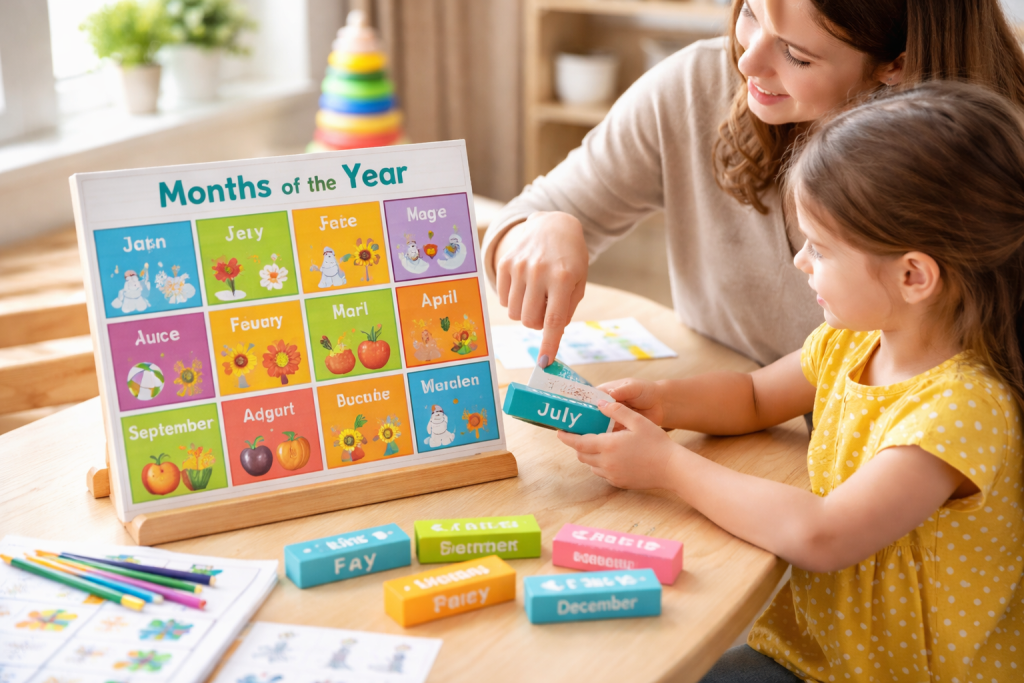
The journey of teaching month names begins with a clear understanding of the learning objectives and the most effective ways to introduce this concept. It’s about creating a foundation that allows for deeper comprehension of temporal concepts.
Introducing the names of the months to young learners requires a gentle and systematic approach. The goal is not simply to have them recite the names but to begin associating them with meaning and context. This initial phase should be welcoming and celebratory, making the learning experience positive from the outset. It’s crucial to acknowledge that children learn at different paces, and patience and repetition are key companions in this endeavour. The introduction should focus on building familiarity, perhaps by presenting the months in a logical order while also hinting at the cyclical nature of the year.
Contents
- 1 Building Familiarity with the Monthly Cycle
- 2 Setting the Stage for Meaningful Learning
- 3 Creating Year-Round Visuals
- 4 Illustrating Seasonal Changes with Visuals
- 5 Melodies for the Months
- 6 Rhyming Games and Mnemonics
- 7 Calendar and Sequencing Games
- 8 Bingo and Matching Activities
- 9 Echoes of Ancient Rome
- 10 Connecting to Historical Events and Traditions
- 11 The Daily Calendar Ritual
- 12 Connecting Months to Events and Activities
- 13 Crafting Month-Themed Projects
- 14 Building and Sequencing with Manipulatives
- 15 Interactive Digital Resources
- 16 Virtual Explorations and Interactive Calendars
- 17 Preschool and Early Elementary: Focus on Fun and Familiarity
- 18 Older Elementary and Middle School: Deeper Exploration and Context
- 19 Adult Learners and Remedial Instruction: Targeted Methods and Reinforcement
- 20 Observing and Informal Assessment
- 21 Performance-Based Assessments
Building Familiarity with the Monthly Cycle
When first introducing the months, it’s beneficial to present them sequentially, perhaps with a visual representation of a circular calendar or a timeline. This helps children grasp the concept of a continuous cycle rather than isolated units. Starting with a familiar point, like their birthday month or a significant upcoming holiday month, can anchor their understanding and make the abstract concept of a year more tangible. Encouraging them to say the names aloud, even if imperfectly at first, builds confidence and acoustic memory. The emphasis at this stage is on exposure and repetition in a low-stakes environment.
Setting the Stage for Meaningful Learning
Beyond simple recitation, it’s important to begin imbuing the month names with meaning. This can be achieved by subtly linking each month to its corresponding season or to typical events associated with that time of year. For instance, describing January as the month that follows the holiday season and often brings snow in many regions, or June as the start of summer and longer days, begins to connect the abstract name to concrete experiences. This foundational step sets the stage for more advanced learning about calendars and time.
Visual aids are indispensable tools for teaching month names, especially to younger learners who are highly responsive to visual stimuli. A well-chosen visual can transform a dry list of words into a vibrant and memorable experience. The key is to select visuals that are clear, engaging, and appropriately represent the concept of each month. These aids not only help with memorisation but also contribute to a deeper understanding of the cyclical nature of the year and the unique characteristics of each month.
Creating Year-Round Visuals
A large, colourful wall calendar can serve as a central visual anchor. Each month can be clearly labelled, and alongside the name, a relevant image or symbol can be placed. For example, a snowflake for January, hearts for February (Valentine’s Day), flowers for April and May, a sun for July and August, falling leaves for October and November, and decorated trees for December. These visuals help create strong associations between the month name and its common imagery, making them easier to recall.
Illustrating Seasonal Changes with Visuals
Another effective approach is to use a series of illustrations or photographs that depict the distinct seasons. By associating specific months with these visual representations of spring, summer, autumn, and winter, children can begin to understand the progression of the year. For younger children, using flashcards with a month name on one side and a corresponding seasonal image on the other can be a powerful learning tool. For older learners, creating a collage or a digital presentation showcasing images that represent each month’s unique characteristics can be equally effective.
Music and rhyme are natural allies in early childhood education, and they are particularly effective for teaching the names of the months. The repetitive nature of songs and rhymes, combined with their inherent rhythm and melody, aids in memorisation and makes the learning process enjoyable. These auditory tools engage different parts of the brain, reinforcing the names of the months in a fun and memorable way.
Melodies for the Months
Numerous songs specifically designed to teach the months of the year are readily available or can be created. These songs often follow familiar tunes, making them easy for children to learn and sing along to. The repetition of the month names within the lyrics, often in their correct sequence, helps embed them in the child’s memory. Actions can be incorporated into these songs, such as pointing to the corresponding month on a calendar or performing a gesture associated with each month’s theme, further enhancing engagement and retention.
Rhyming Games and Mnemonics
Beyond formal songs, simple rhymes and mnemonics can be incredibly useful. A classic example is the rhyme used to determine the number of days in each month. Creating short, catchy rhymes for each month, perhaps focusing on a key characteristic or a word that rhymes with the month’s name, can also be beneficial. For instance, “January, cold and snowy,” or “May, the flowers are gay.” These playful associations make the names more accessible and less abstract.
Games are a cornerstone of effective learning, especially for young minds. Interactive games transform the potentially repetitive task of memorising month names into an exciting challenge. These activities not only reinforce the names of the months but also encourage problem-solving, critical thinking, and social interaction, making the learning experience dynamic and memorable.
Calendar and Sequencing Games
One popular game involves using a set of month cards. Children can be tasked with putting the cards in the correct order to form a year. Variations can include asking them to find a specific month card or to match a month with a corresponding picture or event card. A “Month Scramble”, where the names are jumbled and children have to unscramble them, is another engaging option.
Bingo and Matching Activities
A “Month Bingo” game can be a fun way to test recognition. The caller announces a month, and players mark it on their bingo cards. For younger children, a matching game where they have to pair a month name with its corresponding picture or number can be highly effective. These games encourage active participation and provide immediate feedback, reinforcing correct learning.
Understanding the cultural and historical origins of the month names can add a rich layer of depth and intrigue to the learning process. Many month names have fascinating stories tied to Roman deities, emperors, or ancient traditions. Exploring these contexts can make the names more than just abstract words; they become echoes of history and human endeavours, fostering a deeper appreciation for the language and the passage of time itself.
Echoes of Ancient Rome
Many of the month names we use today have roots in the Roman calendar. For instance, July is named after Julius Caesar, and August after his successor, Augustus. January is believed to be named after Janus, the Roman god of beginnings and doorways. September, October, November, and December, their names derived from Latin words for seven, eight, nine, and ten, respectively, reflect the original structure of the Roman calendar, which began in March. Delving into these etymologies can spark curiosity and provide a captivating narrative for learners.
Connecting to Historical Events and Traditions
Beyond the etymological roots, each month has been shaped by historical events, cultural traditions, and celebrations. Discussing holidays like Thanksgiving in November or the significance of Bastille Day in July can provide tangible anchors for understanding the flow of the year. For older learners, exploring how the calendar has evolved over centuries, including the adoption of the Gregorian calendar, can offer a broader perspective on our current system of timekeeping. This historical lens transforms the learning of month names into an exploration of human history and culture.
The most effective way to solidify the learning of month names is to integrate them into everyday activities and conversations. By making the calendar a natural and ongoing part of a child’s environment, the names of the months become familiar and relevant, reinforcing their understanding of time and sequence in a practical and meaningful way. This consistent exposure is crucial for long-term retention.
The Daily Calendar Ritual
Establishing a daily calendar routine is paramount. This can involve a teacher or parent pointing to the current month, saying its name clearly, and discussing any immediate events associated with it. Children can be encouraged to participate by marking off the days, identifying the current month, or predicting what the next month will be. This simple ritual transforms the abstract concept of months into a tangible part of their daily experience.
Connecting Months to Events and Activities
Throughout the year, consistently linking month names to planned activities and observed events reinforces their meaning. When discussing an upcoming birthday in May or a summer vacation in July, actively state the month. Similarly, when talking about the changing leaves in October or the first snowfall in December, explicitly mention the month. This contextualisation helps children build a rich tapestry of associations, making the month names memorable and functional.
Children learn best through doing and experiencing. Hands-on activities provide a tactile and engaging way to learn the names of the months, moving beyond passive listening or rote memorisation. These activities stimulate multiple senses, creating more robust and lasting memories. The act of creating, building, and manipulating objects related to the months solidifies their understanding in a fun and memorable way.
Crafting Month-Themed Projects
Each month can inspire a unique craft project. For instance, January might involve making snowflake crafts, February could be about heart shapes, April could feature raindrop art, and so on. As children create these crafts, the name of the month is reinforced through discussion and repeated exposure. These tangible creations serve as personal reminders of each month and its associated themes.
Building and Sequencing with Manipulatives
Using physical objects to represent the months is another effective strategy. This could involve using building blocks that are colour-coded or decorated for each month, which children can then arrange in the correct sequence. A “month train”, where each carriage represents a month, complete with its name and a relevant picture, can be a delightful way to teach order. Sensory bins filled with materials representing different months, such as leaves for autumn or sand for summer, can also be incorporated.
In today’s digital age, technology offers a wealth of engaging and interactive tools to supplement traditional methods of teaching month names. Educational apps, online games, and interactive whiteboards can captivate learners and provide dynamic learning experiences that cater to diverse learning styles. These digital resources can make learning fun, accessible, and highly personalised.
Interactive Digital Resources
Many educational apps are designed specifically to teach children about the calendar and the names of the months. These apps often feature colourful graphics, engaging animations, and interactive games that reinforce learning through repetition and immediate feedback. Online platforms also offer a variety of educational videos and interactive exercises that can be used to introduce and practise month names.
Virtual Explorations and Interactive Calendars
Virtual field trips or digital presentations that explore seasonal changes or holidays celebrated in different months can be highly immersive. Interactive digital calendars that allow children to click on a month and learn more about it, perhaps through short videos or facts, can also be incredibly beneficial. Using interactive whiteboards to create dynamic calendar activities, where children can drag and drop month names or pictures, offers another engaging technological approach.
The way month names are introduced and reinforced needs to be adapted to the developmental stage and cognitive abilities of the learner. What works for a preschooler may not be as effective for an elementary school student or an adult learner. Understanding these age-specific nuances is critical for successful instruction.
Preschool and Early Elementary: Focus on Fun and Familiarity
For the youngest learners, the emphasis should be on creating a fun and playful introduction. Songs, rhymes, simple visual aids, and repetitive games are ideal. Connecting months to concrete experiences like birthdays, holidays, and weather is essential. The goal is to build familiarity and a positive association with the names.
Older Elementary and Middle School: Deeper Exploration and Context
As learners mature, the focus can shift to deeper understanding and contextualisation. Exploring the historical and cultural significance of the month names, engaging in more complex sequencing activities, and relating month names to the study of history, science (seasons), and geography becomes more appropriate. Technology can be used to explore these broader connections.
Adult Learners and Remedial Instruction: Targeted Methods and Reinforcement
For adult learners or those needing remedial instruction, the approach might involve more direct instruction, focused practice, and tailored reinforcement strategies. Utilising a combination of auditory, visual, and kinaesthetic methods, along with breaking down information into manageable chunks, can be highly effective. The emphasis might also be on practical application, such as understanding appointment scheduling or planning events.
Assessing a child’s understanding of month names goes beyond simple recitation. It involves evaluating their ability to recall, sequence, and apply this knowledge in different contexts. A multifaceted approach to assessment ensures a comprehensive understanding of their progress and identifies areas where further support may be needed.
Observing and Informal Assessment
Ongoing observation is a primary assessment tool. Noticing when a child spontaneously uses month names in conversation, their ability to point to a specific month when asked, or their participation in calendar activities provides valuable insights. Informal quizzes, where children are asked to name the months in order or identify a specific month, can also be beneficial.
Performance-Based Assessments
Performance-based assessments involve tasks that require the application of month name knowledge. This could include sequencing month cards, correctly placing events on a yearly calendar, or drawing pictures representing each month. Games like “Month Bingo” or matching activities can also serve as informal assessments of recognition and recall. For older learners, short written quizzes requiring them to list months or answer questions about their order and significance can be used. The ultimate goal is to ensure that mastering the months is not just about memorisation but about developing a robust understanding of temporal concepts that will serve them throughout their lives.

Emma Carter is an early childhood education enthusiast and content creator at Edyzoa. She is passionate about helping children learn through fun, engaging, and safe educational resources that support creativity, curiosity, and skill development.