
Free Printable Math Worksheets: Making Learning Fun and Easy
In the pursuit of effective and enjoyable education, free printable maths worksheets have emerged as a remarkably valuable resource. They offer a tangible and accessible way to reinforce mathematical concepts, practise essential skills, and foster a positive attitude towards a subject that can sometimes feel daunting for learners of all ages. The beauty of these readily available tools lies in their simplicity, their adaptability, and their inherent power to transform rote memorisation into engaging practice. From sparking initial understanding to solidifying advanced proficiency, printable worksheets serve as versatile companions on the mathematical journey, ensuring that learning is not only effective but also, dare we say, fun.
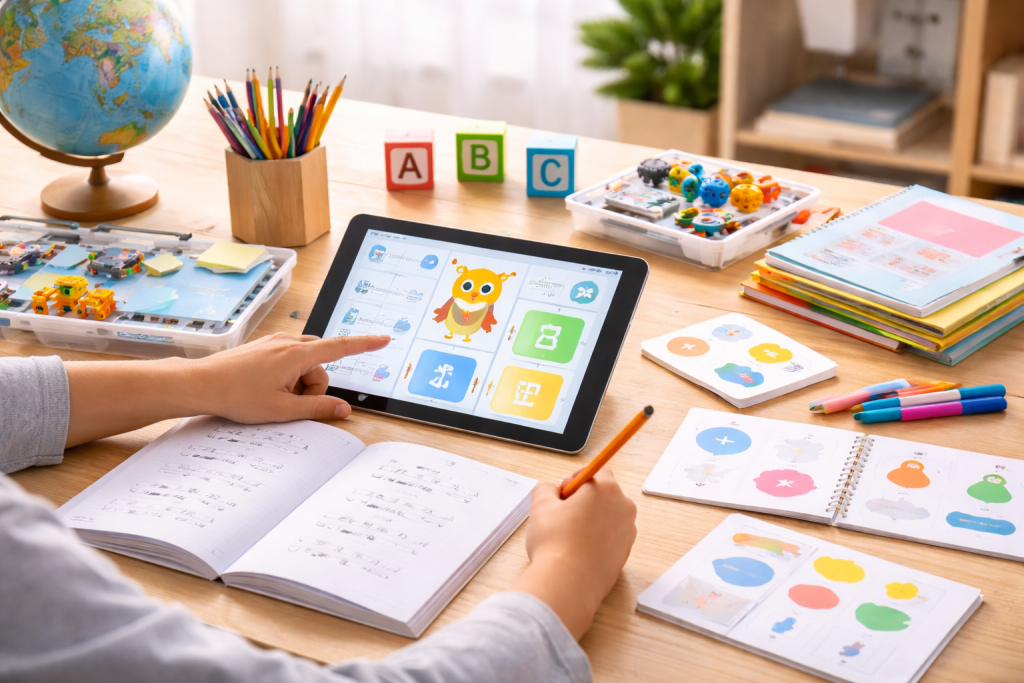
The advantages of incorporating free printable maths worksheets into a learning routine are extensive and far-reaching. They provide a hands-on method that complements digital learning, offering a break from screens and engaging a child’s fine motor skills as they write, draw, or colour. This tactile engagement can significantly improve retention and understanding for many learners. Furthermore, the immediate feedback offered by completing a worksheet allows for timely identification of areas where a student might be struggling. Such an approach allows for prompt intervention and focused practice, preventing small misunderstandings from snowballing into larger difficulties.
Contents
- 1 Building Foundational Skills with Targeted Practice
- 2 Enhancing Problem-Solving Abilities
- 3 Fostering Independence and Self-Reliance
- 4 Reinforcing Classroom Concepts at Home
- 5 Providing Differentiated Instruction
- 6 Making Learning Accessible and Affordable
- 7 Math Games and Challenges
- 8 Creative Application Projects
- 9 Visual and Kinesthetic Learning Integration
- 10 Utilizing Reputable Educational Websites
- 11 Prioritizing Age and Skill Appropriateness
- 12 Checking for Clarity and Engaging Design
- 13 Examining Resource Quality and Alignment
- 14 Structuring a Math Unit with Worksheets
- 15 Creating Customized Learning Paths
- 16 Documenting Progress and Identifying Gaps
- 17 Integrating Worksheets with Other Learning Modalities
- 18 Collaborative Problem-Solving Stations
- 19 Math Scavenger Hunts
- 20 Differentiated Practice with Choice Boards
- 21 Integrating Worksheets with Thematic Units
- 22 Reinforcement Through Repetition
- 23 Developing Fluency and Accuracy
- 24 Identifying and Addressing Misconceptions
- 25 Cultivating a Growth Mindset
- 26 Visual Learners: Color-Coding and Diagrams
- 27 Auditory Learners: Read-Aloud and Discussion
- 28 Kinesthetic Learners: Manipulatives and Movement
- 29 Personalized Challenges for Advanced Learners
- 30 Early Childhood (Pre-K to Grade 2): Foundational Skills
- 31 Elementary School (Grades 3-5): Expanding Horizons
- 32 Middle School (Grades 6-8): Pre-Algebra and Beyond
- 33 High School (Grades 9-12): Advanced Concepts and Application
- 34 Making Math Approachable and Less Intimidating
- 35 Celebrating Small Victories and Building Confidence
- 36 Connecting Math to Real-World Interests
- 37 Empowering Through Choice and Autonomy
Building Foundational Skills with Targeted Practice
One of the most profound benefits of printable math worksheets lies in their ability to facilitate targeted practice. Whether a child is just beginning to grasp addition and subtraction or is fascinated by fractions and algebraic equations, worksheets can be specifically chosen to address those exact needs. This focused approach ensures that learners are not wasting time on concepts they have already mastered but are instead honing the skills that require reinforcement. Building a strong mathematical foundation through targeted practice is crucial for successfully building more complex ideas.
Enhancing Problem-Solving Abilities
Beyond simple recall or procedural practice, many printable math worksheets are designed to cultivate critical thinking and problem-solving skills. These worksheets often present word problems that require students to analyse the given information, identify the relevant mathematical operations, and apply them to arrive at a solution. This process mirrors real-world mathematical applications and helps children develop the analytical skills necessary to tackle diverse challenges, not just within mathematics but across various academic disciplines and life situations.
Fostering Independence and Self-Reliance
The act of independently completing a worksheet can be a powerful confidence builder for young learners. When a child can successfully work through a set of problems on their own, it instills a sense of accomplishment and encourages self-reliance. This is particularly important in educational settings where individualised learning is emphasised. The ability to work with material and find answers on their own is an important skill that goes beyond math and helps a child grow academically and personally.
The true power of free printable math worksheets lies in their capacity to act as a valuable supplement to existing educational approaches. They are not meant to replace formal instruction but rather to enhance and reinforce it, offering additional opportunities for practice and exploration. This flexible integration allows educators and parents to tailor the learning experience to the specific needs and pace of each individual child.
Reinforcing Classroom Concepts at Home
For students attending traditional schools, printable maths worksheets provide an excellent bridge between the classroom and home learning. Teachers often introduce new concepts, and parents can utilise worksheets to solidify this understanding. By working through problems related to the day’s lesson, children can reinforce what they’ve learned, identify any lingering confusion, and build confidence in their abilities. This consistent reinforcement is key to deep learning and long-term retention.
Providing Differentiated Instruction
One of the significant advantages of printable worksheets is their inherent ability to facilitate differentiated instruction. Teachers can select worksheets that are appropriate for varying skill levels within a class, providing more challenging problems for advanced learners and more foundational exercises for those who need extra support. This allows every student to engage with mathematical concepts at their pace and level of understanding, ensuring that no one is left behind or held back.
Making Learning Accessible and Affordable
We cannot overstate the significance of these worksheets’ “free” nature in providing everyone with quality educational resources. Not all families or schools have the budget for expensive workbooks or supplementary materials. Printable worksheets democratise access to practice, ensuring that all children, regardless of their socioeconomic background, can benefit from the reinforcement and skill-building that these resources offer. This affordability makes them an invaluable tool for educators, parents, and homeschooling families alike.
Moving beyond the traditional worksheet format, creative and engaging activities can transform the practice of maths into an enjoyable experience. Incorporating a playful element can replace the perceived drudgery of repetition with enthusiastic participation, resulting in deeper engagement and more effective learning.
Math Games and Challenges
Transforming worksheets into games is a fantastic way to boost motivation. For instance, a worksheet on multiplication facts can become a “math race” where the child tries to complete as many problems as possible within a set time. Or, problems could be cut out and placed in a hat for a “math mystery box” where the child draws a problem to solve. This gamified approach injects an element of fun and friendly competition, making practice feel less like work and more like play.
Creative Application Projects
Worksheets can also be the springboard for more creative projects. After completing a set of geometry worksheets on shapes, a child could be tasked with building a structure using only those shapes. Or, after working on measurement worksheets, they could design and “build” a miniature room by drawing it to scale. These activities encourage children to apply their learned skills in a practical and imaginative way, demonstrating their understanding in a tangible form.
Visual and Kinesthetic Learning Integration
Many printable worksheets can be adapted to incorporate visual and kinaesthetic learning. For example, a worksheet on fractions can be supplemented by using manipulatives like blocks or cut-out shapes to represent the fractions. For a worksheet on graphing, children could physically move around a pre-made graph on the floor. This multi-sensory approach caters to different learning styles and helps to solidify concepts in a more profound way.
Navigating the vast expanse of online resources can seem overwhelming, but with a strategic approach, finding high-quality free printable maths worksheets is achievable. The key is knowing where to look and what to look for, ensuring that the chosen resources are free, effective, and age-appropriate.
Utilizing Reputable Educational Websites
Many established educational websites offer a treasure trove of free printable maths worksheets, often curated by experienced educators. These sites typically organise their resources by grade level and mathematical topic, making it easy to find exactly what you need. Look for websites that provide clear descriptions of the skills covered and often include answer keys for easy checking.
Prioritizing Age and Skill Appropriateness
Worksheets specifically tailored to the child’s age and current skill level are the most effective. A worksheet that is too easy will not challenge the learner, while one that is too difficult can lead to frustration and discouragement. Taking the time to carefully review the content and complexity of a worksheet before printing is critical for guaranteeing a positive learning experience.
Checking for Clarity and Engaging Design
While functionality is paramount, the visual presentation of a worksheet also plays a role in engagement. Worksheets that are neatly formatted, easy to read, and perhaps incorporate simple illustrations or borders can be more appealing to children. Avoid worksheets that are cluttered, use confusing fonts, or have low-quality printing. Clarity and a visually appealing, though not overly distracting, design can significantly impact a child’s willingness to tackle the problems.
Examining Resource Quality and Alignment
Not all free resources are created equal. It’s beneficial to look for worksheets that are aligned with common educational standards or curricula. Many reputable sites will explicitly state this. Additionally, read reviews or testimonials if available, or try a few worksheets from a particular source to gauge their overall quality. This due diligence ensures that you are providing effective learning tools.
For homeschooling families, free printable maths worksheets are an indispensable tool, offering flexibility and cost-effectiveness in designing a robust mathematics curriculum. They allow for personalised learning paths and can be easily integrated into various pedagogical approaches, ensuring that a child’s mathematical education is comprehensive and engaging.
Structuring a Math Unit with Worksheets
A homeschooling unit on a specific math topic, such as multiplication, can be effectively structured around printable worksheets. You can begin with worksheets that introduce the concept, progress to those focusing on practice, and conclude with challenge problems or word-based applications. This sequential approach ensures mastery of the topic before moving on.
Creating Customized Learning Paths
The beauty of homeschooling lies in its adaptability, and free printable maths worksheets significantly enhance this. If a child grasps a concept quickly, you can move them to more advanced worksheets. Conversely, if they need more time, you can provide additional practice with simpler or reinforcing worksheets. This personalised pacing ensures that no child is rushed or held back.
Documenting Progress and Identifying Gaps
Worksheets provide concrete evidence of a child’s progress. By keeping completed worksheets, you create a tangible portfolio that showcases their learning journey. This also serves as a useful diagnostic tool, highlighting areas where a child excels and pinpointing any persistent gaps in understanding that may require further attention or a different approach.
Integrating Worksheets with Other Learning Modalities
A well-rounded homeschooling curriculum often blends various learning modalities. Free printable maths worksheets can be seamlessly integrated with hands-on activities, educational games, online resources, and real-world applications. For example, after completing a worksheet on measurement, a child could then engage in a practical activity like baking, applying their learned skills in a real-world context.
In an educational setting, free printable maths worksheets offer a wealth of possibilities for creating dynamic and engaging learning experiences. Educators can creatively use these worksheets not only for straightforward practice but also to foster collaboration, critical thinking, and a genuine enthusiasm for mathematics.
Collaborative Problem-Solving Stations
Set up different stations around the classroom, each featuring a different maths worksheet or a set of problems from a worksheet. Divide students into small groups and have them rotate through the stations, working collaboratively to solve the problems. This encourages peer learning and allows students to explain their thinking to one another, solidifying their understanding.
Math Scavenger Hunts
Transforming a worksheet into a scavenger hunt can be incredibly motivating. For example, problems could be hidden around the classroom, and students must solve one to find the location of the next. Or, problems could require students to find objects in the classroom that represent the mathematical concept being practised, such as finding objects that form a specific geometric shape.
Differentiated Practice with Choice Boards
Create a “choice board” using a variety of printable maths worksheets organised by skill level or topic. Students can then choose which worksheets they want to complete, providing them with a sense of agency in their learning. This approach caters to diverse learning needs and allows students to focus on areas where they feel they need the most practice or challenge.
Integrating Worksheets with Thematic Units
When teaching a thematic unit, such as space exploration, you can find or adapt math worksheets that tie into the theme. For instance, problems might involve calculating distances between planets or determining the volume of rockets. This contextualisation makes maths more relevant and exciting for students, demonstrating its application in real-world scenarios they find interesting.
The consistent and deliberate use of free printable math worksheets plays a foundational role in the development of a child’s mathematical proficiency. They are not merely exercises; they are deliberate tools for skill acquisition, refinement, and mastery, contributing significantly to a child’s overall academic success.
Reinforcement Through Repetition
Mathematics is a subject that often requires repetition to truly embed concepts in long-term memory. Printable worksheets provide an accessible and manageable way to offer this essential practice. By working through similar problems repeatedly, learners strengthen their understanding of algorithms and develop automaticity in basic calculations, freeing up cognitive resources for more complex problem-solving.
Developing Fluency and Accuracy
Regular practice with worksheets helps students develop both fluency and accuracy in their mathematical operations. As they become more comfortable with the processes, their speed increases, and the likelihood of making errors decreases. This fluency is a hallmark of mathematical competence and allows students to tackle more challenging problems with confidence.
Identifying and Addressing Misconceptions
Worksheets offer a clear window into a student’s thought process. When a student consistently makes a particular type of error, it often indicates a misconception about a mathematical concept. By reviewing completed worksheets, educators and parents can quickly identify these misconceptions and provide targeted instruction to correct them, preventing the entrenchment of incorrect understanding.
Cultivating a Growth Mindset
The process of working through challenging problems on worksheets and eventually mastering them fosters a growth mindset. Students learn that perseverance and practice lead to improvement. Each completed worksheet, especially those that were initially difficult, represents a small victory and a testament to their effort, building confidence and encouraging them to embrace future mathematical challenges.
Recognising and accommodating diverse learning styles is paramount to effective education. Free printable maths worksheets offer a remarkable degree of flexibility, allowing for customisation to cater to the unique ways in which children learn and process information.
Visual Learners: Color-Coding and Diagrams
For visual learners, worksheets can be enhanced by encouraging the use of colour. They can colour-code answers, highlight important information, or draw diagrams to represent the problems. Many websites also offer worksheets with visual aids already incorporated, such as illustrations or charts, which can significantly improve comprehension for those who learn best by seeing.
Auditory Learners: Read-Aloud and Discussion
While worksheets are primarily a visual medium, auditory learners can benefit by having the problems read aloud to them. Encouraging them to explain their solutions verbally, either to themselves or to another person, can also reinforce their understanding. This verbal processing helps them to internalise the concepts and articulate their reasoning.
Kinesthetic Learners: Manipulatives and Movement
Kinaesthetic learners thrive on hands-on experiences. Worksheets can be paired with physical manipulatives. For instance, if a worksheet deals with addition, students can use blocks or counters to physically combine the numbers before recording the answer. For geometry, they can use tangible shapes to match the diagrams on the worksheet.
Personalized Challenges for Advanced Learners
For students who quickly master a concept, worksheets can be customised to provide advanced challenges. This might involve finding worksheets with more complex problems, incorporating multi-step solutions, or encouraging them to create their own word problems based on the worksheet’s format. This keeps them engaged and prevents boredom, which fosters continued intellectual growth.
The sheer variety of free printable maths worksheets available online means that there is a resource for virtually every mathematical concept and for every grade level, from early childhood to the cusp of higher education. Understanding this diversity allows educators and parents to select the most appropriate tools for their specific needs.
Early Childhood (Pre-K to Grade 2): Foundational Skills
In these formative years, worksheets typically focus on foundational skills such as number recognition, counting, basic addition and subtraction within 10 or 20, simple patterns, and shape identification. These worksheets often incorporate colourful illustrations and engaging activities like colouring by number or matching.
Elementary School (Grades 3-5): Expanding Horizons
As students progress through elementary school, worksheets begin to cover more complex topics like multiplication and division, fractions, decimals, perimeter, area, and introductory data analysis. The problems become more challenging, often involving multi-step calculations and word problems that require more critical thinking.
Middle School (Grades 6-8): Pre-Algebra and Beyond
Middle school worksheets involve more abstract concepts, including pre-algebraic equations, algebraic expressions, ratios, proportions, percentages, geometry, and probability. These worksheets are crucial for building the conceptual foundation required for high school mathematics.
High School (Grades 9-12): Advanced Concepts and Application
For high school students, printable worksheets can serve as supplementary practice for algebra, geometry, trigonometry, and calculus. They can focus on specific problem types, reinforce theorems, or provide practice for standardised tests. Many advanced worksheets focus on applying concepts in more complex, real-world scenarios.
The journey to fostering a genuine love for mathematics in children often begins with making the subject accessible, engaging, and rewarding. Free printable maths worksheets, when used thoughtfully, can play a significant role in this transformation, shifting the perception of maths from a chore to an adventure.
Making Math Approachable and Less Intimidating
For many children, the abstract nature of mathematics can be intimidating. Printable worksheets offer a concrete and visual way to engage with concepts, breaking them down into manageable steps. The ability to work at one’s own pace, with immediate opportunities for practice and reinforcement, can significantly reduce anxiety and build confidence. This gradual exposure to mathematical challenges, coupled with the certainty that mistakes are learning opportunities, can demystify the subject.
Celebrating Small Victories and Building Confidence
Every correctly solved problem on a worksheet represents a small victory, a tangible achievement that children can see and appreciate. When children consistently experience success, even in small increments, their confidence grows. This positive reinforcement loop is crucial for building a resilient mindset toward mathematics. Completing a worksheet and seeing the number of correct answers can powerfully motivate them to tackle the next challenge with renewed enthusiasm.
Connecting Math to Real-World Interests
The most compelling way to ignite a passion for any subject is to demonstrate its relevance. Free printable maths worksheets can be creatively adapted to align with children’s interests. If a child loves dinosaurs, worksheets can feature dinosaur-themed word problems. If they are fascinated by space, problems can revolve around planetary distances or rocket launches. By weaving mathematical concepts into topics that already captivate their imagination, learning becomes more meaningful and enjoyable, fostering a deeper connection with the subject.
Empowering Through Choice and Autonomy
Giving children a degree of control over their learning tends to increase their investment. With the abundance of free printable maths worksheets available, parents and educators can offer choices. Children can select worksheets that align with their current interests or choose problems that they find particularly engaging. This sense of autonomy can foster a proactive approach to learning, transforming them from passive recipients of information into active participants in their own mathematical development. This empowerment can be a powerful catalyst in developing a lifelong appreciation and love for the discipline.
Emma Carter is an early childhood education enthusiast and content creator at Edyzoa. She is passionate about helping children learn through fun, engaging, and safe educational resources that support creativity, curiosity, and skill development.