In a world increasingly driven by cognitive prowess, nurturing your child’s intellectual potential has never been more crucial. While traditional schooling provides a foundational education, the true blossoming of a child’s capabilities often hinges on engaging their minds in stimulating and enjoyable ways. This is where the power of brain games becomes crucial. Far from being mere pastimes, these carefully crafted activities offer a gateway to unlocking a child’s inherent genius, fostering a lifelong love for learning and equipping them with the essential skills to navigate the complexities of the modern world.
While brain games may not be a universal solution, their influence on a child’s development is undeniably extensive. They act as miniature mental workouts, strengthening neural pathways and building a robust cognitive foundation. The benefits extend across a spectrum of crucial developmental areas, from sharp memory to agile thinking.
Enhancing Cognitive Skills: The Cornerstone of Development
The primary advantage of regular engagement with brain games lies in their remarkable ability to enhance a child’s cognitive skills. These are the fundamental building blocks of learning and problem-solving, and brain games expertly target and strengthen them.
Sharpening Memory and Concentration
Many brain games directly challenge a child’s working memory and their ability to focus. Activities that require remembering patterns, sequences, or details necessitate sustained attention. This consistent practice improves short-term recall and builds the capacity for longer periods of concentration, a vital skill for academic success and task completion.
Boosting Logical Reasoning and Problem-Solving Abilities
Children engage in critical thinking through puzzles, strategy games, and logic challenges. They need to analyse situations, identify patterns, decipher rules, and devise solutions. This iterative process of trial and error, hypothesis testing, and strategic planning directly cultivates their logical reasoning and problem-solving prowess.
Fostering Spatial Reasoning and Visual-Perceptual Skills
Games involving building blocks, tangrams, mazes, or even certain video games can significantly improve a child’s spatial reasoning. They learn to understand and manipulate objects in space, visualise how pieces fit together, and develop a strong sense of direction and proportion. This is crucial for subjects like geometry, art, and even everyday navigation.
Improving Language Skills and Vocabulary Acquisition
Certain brain games are specifically designed to expand a child’s vocabulary and enhance their linguistic abilities. Word puzzles, storytelling games, and even rhyming activities encourage them to explore the nuances of language, understand context, and articulate their thoughts more effectively.
The “fun” in brain games is not merely a marketing ploy; it’s the very engine that drives engagement and learning. When children are genuinely enjoying an activity, their resistance to challenges diminishes, and their receptiveness to new information increases exponentially.
A Spectrum of Engaging Activities
The landscape of brain games is vast and varied, offering something for every child’s interest and developmental stage. From classic board games to cutting-edge digital applications, the options are plentiful and continually evolving.
The Timeless Appeal of Puzzles
Jigsaw puzzles, crosswords, Sudoku, and logic grid puzzles provide excellent opportunities for focused problem-solving and pattern recognition. The satisfaction of completing a puzzle, piece by piece, is a powerful motivator.
Strategy and Board Games: Building Critical Thinking
Chess, checkers, Settlers of Catan, and even simpler games like Connect Four require children to think ahead, anticipate their opponent’s moves, and strategise for victory. These games inherently teach planning, foresight, and adaptability.
Memory and Matching Games: Honing Recall
Classic memory card games, “Simon Says”, and other activities that involve recalling sequences or matching pairs are fantastic for strengthening working memory and attention to detail.
Building and Construction Toys: Igniting Creativity and Spatial Skills
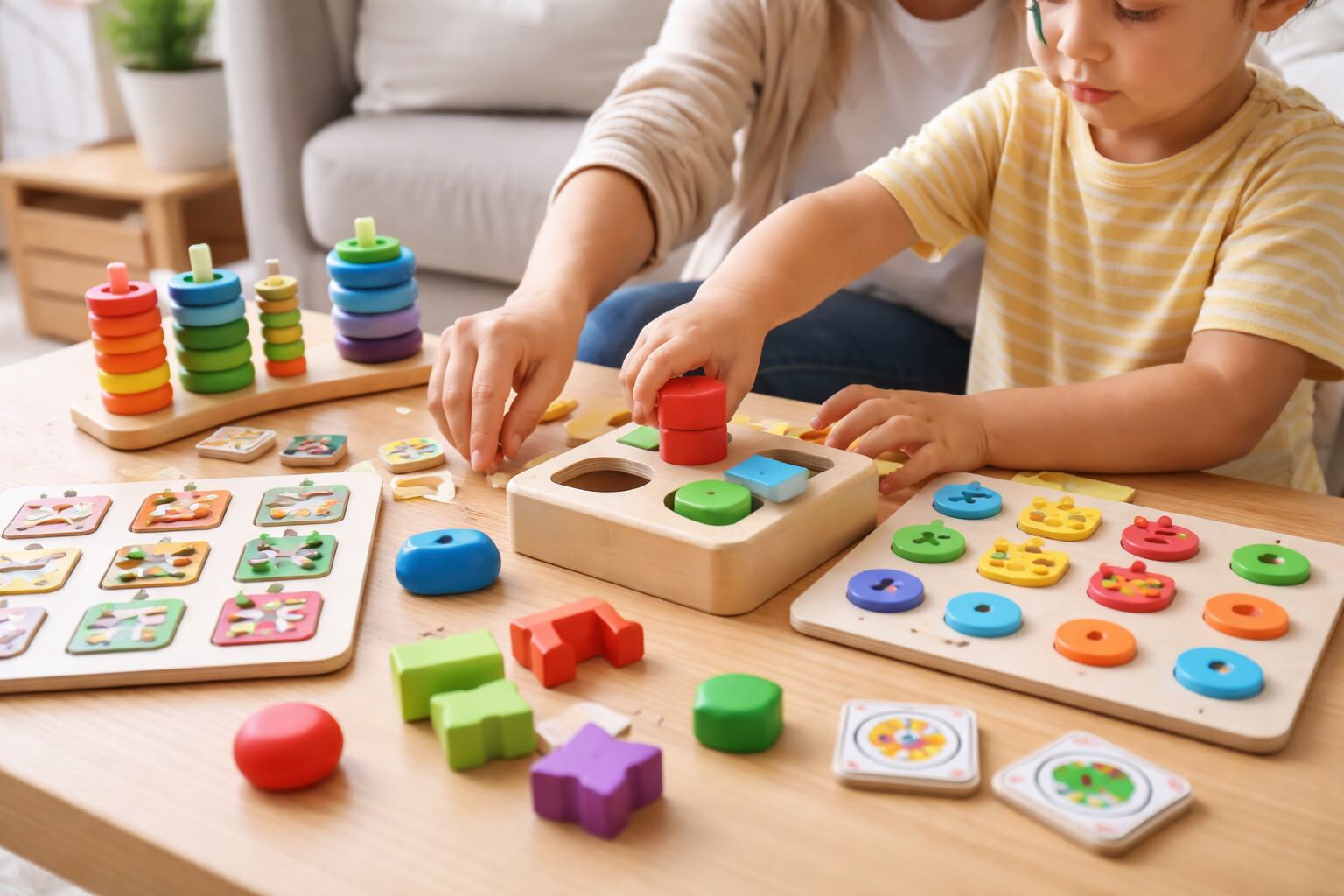
LEGOs, building blocks, Magna-Tiles, and similar construction toys not only foster creativity and imagination but also significantly enhance spatial reasoning and fine motor skills.
Digital Brain Games and Apps: Modern Engagement
Numerous educational apps and online games are now available, offering interactive and often gamified approaches to cognitive skill development. These can be particularly effective for engaging older children and providing personalised learning experiences.
The true power of brain games is realised when they become a regular part of a child’s life, rather than an occasional undertaking. Integrating them seamlessly into the daily routine makes them feel natural and enjoyable, avoiding any sense of forced learning.
Making Learning a Natural Part of Play
The key is to weave these activities into existing routines or create dedicated, yet informal, periods for brain-boosting fun.
Morning Warm-ups: A Cognitive Kickstart
Begin the day with a quick brain game. This could be a word puzzle on the breakfast table, a quick memory challenge, or a brief strategy game before getting ready for school. The activity primes their minds for the day ahead.
Afternoon Enrichment: Winding Down with Stimulation
After school, instead of immediately resorting to passive screen time, consider offering a brain game. This can be a great way to decompress while still engaging their minds. A collaborative puzzle or a competitive board game can be a wonderful way to connect as a family.
Bedtime Rituals: Peaceful Mental Engagement
Before sleep, a calming yet mentally stimulating game can be beneficial. Storytelling games, simple logic puzzles, or even a quiet card game can help wind down the mind gently.
Travel Time: Turning Downtime into Uptime
Long car rides or plane journeys are perfect opportunities for brain games. Portable puzzle books, travel-sized board games, or educational apps can transform potentially tedious periods into engaging learning experiences.
The effectiveness of brain games is not just anecdotal; it is deeply rooted in the principles of neuroscience and cognitive psychology. Understanding the science behind these games can provide a clearer picture of their profound impact on a child’s developing brain.
Neuroplasticity: The Brain’s Adaptable Superpower
The human brain, especially in childhood, is remarkably plastic. This neuroplasticity refers to the brain’s ability to reorganise itself by forming new neural connections throughout life. Brain games act as catalysts for this process, creating new pathways and strengthening existing ones.
Strengthening Neural Pathways
Children activate specific areas of their brain when they engage in activities that require problem-solving, pattern recognition, or memory recall. Repeated engagement with these activities leads to the strengthening of the neural pathways associated with these functions. The more a specific cognitive skill is practised, the more efficient and robust its underlying neural network becomes.
Promoting Cognitive Flexibility
Brain games often require children to switch between different thinking strategies, adapt to new rules, and think from multiple perspectives. This process fosters cognitive flexibility, which is the ability to adjust one’s thinking and behaviour in response to changing circumstances. This is an invaluable skill for navigating an ever-evolving world.
Enhancing Executive Functions
Executive functions are a set of higher-order mental processes that control and regulate other cognitive abilities and behaviours. These include planning, working memory, impulse control, and cognitive flexibility. Many brain games directly target and strengthen these important executive functions, which are the building blocks of success in school and in life.
Not all brain games are created equal, and the most effective ones are those that are appropriately tailored to a child’s age, interests, and developmental stage. A game that is too challenging can lead to frustration, while one that is too simple may not offer sufficient stimulation.
Age Appropriateness and Developmental Stages
Understanding a child’s developmental milestones is key to selecting suitable brain games. A game that is perfect for a six-year-old might be too complex for a four-year-old or too simplistic for a ten-year-old.
Observing Your Child’s Interests
The most engaging brain games are those that align with a child’s inherent interests. If a child loves animals, animal-themed puzzles or strategy games might be more appealing. If they are fascinated by space, space-themed logic puzzles could be a hit.
Balancing Challenge and Enjoyment
Games that provide a moderate challenge are ideal as they stimulate their thinking and problem-solving skills without overwhelming them. Observing their reactions and offering gentle guidance can help you gauge the right level of difficulty.
Considering Different Learning Styles
Some children learn best visually, while others are more auditory or kinaesthetic. Opt for games that cater to their primary learning style but also provide opportunities to develop other modes of learning.
Brain games are not just about acquiring skills; they are also potent tools for cultivating a positive attitude toward learning and fostering a resilient growth mindset. When learning is associated with fun and accomplishment, children are more likely to embrace challenges and persevere through difficulties.
The Joy of Discovery and Accomplishment
The inherent satisfaction derived from solving a puzzle or mastering a new strategy in a game reinforces the idea that learning is rewarding. This positive reinforcement can translate into a more enthusiastic approach to academic tasks.
Embracing Mistakes as Learning Opportunities
Brain games often involve trial and error. By framing these experiences as opportunities to learn and adapt, children develop a healthy perspective on mistakes, viewing them not as failures but as stepping stones toward understanding.
Encouraging Collaboration and Communication
Playing many brain games with others fosters teamwork, communication, and the ability to learn from peers. This social aspect of learning can be incredibly beneficial for developing social skills and a sense of community.
While many brain games focus on logic and memory, a significant number also act as powerful catalysts for creativity and innovative problem-solving. These games encourage children to think creatively and explore unconventional approaches.
Unleashing Imagination and Inventiveness
Building blocks and open-ended construction toys, for instance, allow children to bring their imaginative visions to life, fostering both creativity and the practical skills needed to achieve their ideas. Storytelling games, where children collaboratively build narratives, also ignite their imaginative capacities and linguistic fluency.
Thinking Convergently and Divergently
Some games require convergent thinking, where there is a single correct answer. Others, however, encourage divergent thinking, where multiple solutions can exist. A balance of both nurtures a well-rounded problem-solver.
As children engage with and master brain games, they experience a tangible sense of accomplishment. This repeated success is a potent builder of confidence and self-esteem.
The Confidence of Mastery
Successfully solving a challenging puzzle or winning a strategic game instills a sense of competence. This feeling of achievement, however small, reinforces a child’s belief in their abilities and encourages them to tackle new challenges with greater assurance.
Overcoming Frustration and Building Resilience
When children encounter a difficult game, learning to persist and find a solution, even with occasional setbacks, builds resilience. This ability to overcome frustration is a critical life skill that will serve them well beyond the realm of games.
Ultimately, the overarching objective of incorporating brain games into a child’s life is to make learning an enjoyable and engaging experience. When learning is intrinsically motivating and associated with play, children develop a lifelong love for exploration and intellectual growth.
The Synergy of Play and Learning
Brain games represent the perfect synergy of play and learning. They transform potentially dry academic concepts into exciting challenges, making education a journey of discovery rather than a chore. By tapping into a child’s natural inclination to play, we can unlock their potential and equip them with the cognitive tools and the positive attitude needed to thrive in an ever-evolving world, truly unleashing their inner genius.