Unleash the inner artist in children of all ages with a vibrant world of creative drawing activities! Beyond simple scribbles, drawing is a powerful conduit for imagination, communication, and skill development. This exploration includes diverse approaches designed to ignite passion, foster creativity, and provide delightful opportunities for artistic expression. From tactile explorations with varied materials to collaborative endeavours and digital adventures, there’s a universe of drawing to discover.
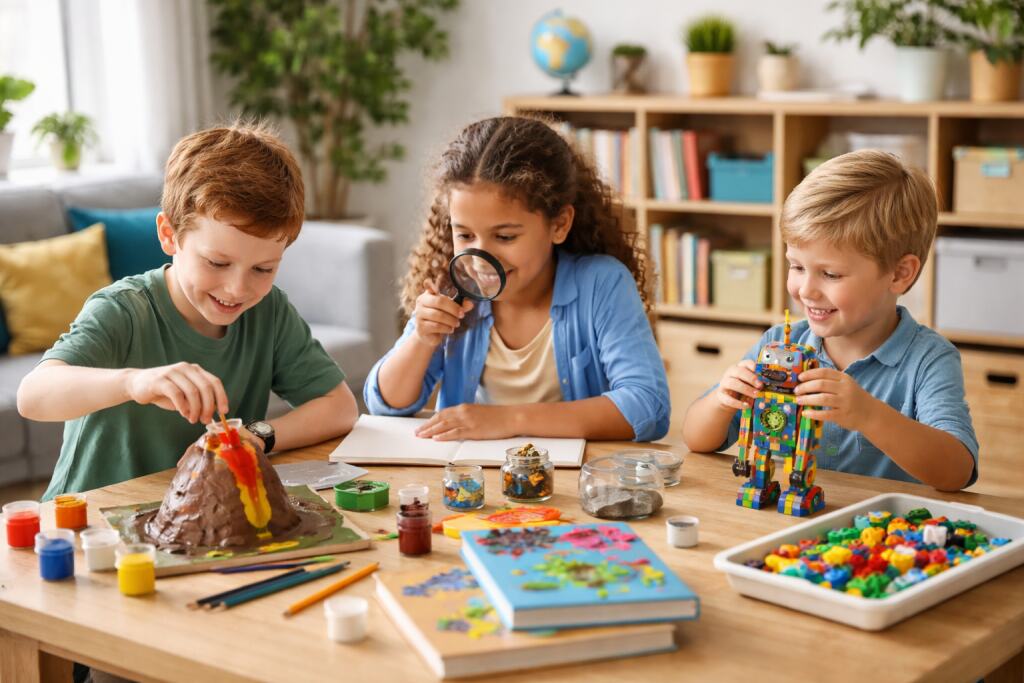
Drawing is more than just putting pencil to paper; it’s a basic way for kids to learn about and interact with the world around them. It’s a bridge between their inner thoughts and external expression, allowing them to translate abstract ideas into tangible forms. For toddlers, it might be the joy of leaving a brightly coloured mark, while for older children, it can be a sophisticated way to tell stories, solve problems, or even process emotions. The beauty of drawing lies in its accessibility and its inherent allowance for individuality. There’s no “right” or “wrong” in a child’s drawing; each stroke, each colour choice, is a unique declaration of their developing perspective. Encouraging drawing from a young age instills confidence and a sense of accomplishment, laying the groundwork for a lifelong appreciation of art and creativity. It’s a process that fosters fine motor skills, hand-eye coordination, and visual literacy, all while providing a therapeutic outlet. The goal is not to produce masterpieces but to nurture the act of creation itself, celebrating the journey and the child’s unique artistic voice.
The Developmental Benefits of Drawing
Drawing plays a crucial role in a child’s holistic development. It sharpens fine motor skills essential for tasks like writing, buttoning clothes, and using utensils. The intricate control required to guide a crayon or pencil refines precise movements in the fingers and hands. Furthermore, drawing significantly enhances hand-eye coordination, building the connection between what a child sees and what their hand can physically achieve. This translates to better performance in various academic and everyday activities. Beyond the physical, drawing is a powerful cognitive tool. It encourages problem-solving as children figure out how to represent objects, understand perspective, and depict relationships between elements. Visual perception is honed as they observe the world around them, breaking down complex forms into simpler shapes and lines. Creativity flourishes as they experiment with different approaches, invent characters, and create their own visual languages. The ability to think outside the box and come up with novel solutions is a direct benefit of engaging in freeform drawing. Moreover, drawing acts as a vital medium for emotional expression. Children can convey feelings and experiences that they might not yet have the verbal capacity to articulate. A dark, scribbled drawing might signify anger or frustration, while a bright, colourful scene could represent happiness and excitement. This emotional processing through art is invaluable for healthy emotional development. Finally, drawing also contributes to a child’s sense of self. As they create and see their ideas come to life, they build confidence and a belief in their own capabilities. This fosters a positive self-image and encourages them to continue exploring and expressing themselves.
Setting the Stage for Creative Exploration
Creating an environment that fosters drawing is simple yet impactful. It begins with readily available materials. A dedicated “art corner” or even just a designated space on a table can make a difference. Ensuring a variety of drawing tools—crayons, coloured pencils, markers, pastels, and chalk—along with different types of paper, opens up a spectrum of possibilities. Even natural materials found outdoors can be incorporated. The key is to offer choices and encourage experimentation without judgement. Providing ample space for children to spread out and work is also beneficial, allowing them to fully immerse themselves in their creative process. Beyond materials, the attitude of the adult is paramount. Enthusiasm and encouragement are the most important ingredients. Instead of dictating what a child should draw, offer prompts and ask open-ended questions like “Tell me about your drawing” or “What’s happening in this picture?” This validates their efforts and encourages them to elaborate on their artistic choices. Celebrating their work by displaying it or simply acknowledging it with genuine appreciation further boosts their confidence and motivation. It’s about nurturing their natural inclination to create, not about moulding them into a specific artistic style.
The world of drawing extends far beyond a standard pencil and paper. By introducing children to a diverse range of materials, we unlock a richer sensory experience and a deeper understanding of how different mediums interact with surfaces. This exploration is not just about creating aesthetically pleasing images; it’s about sensory engagement, tactile discovery, and colour theory at a foundational level. Each material offers unique possibilities for mark-making, vibrancy, and textural effects, leading to more dynamic and engaging artwork.
The Tactile Allure of Crayons and Pastels
Crayons, with their waxy, slightly yielding texture, offer a smooth, vibrant application that is perfect for young artists. Their broad strokes can cover large areas with bold colour, and with lighter pressure, they can create softer, more blended effects. The waxy nature of crayons also allows for interesting techniques like wax resist, where a layer of crayon can be drawn over with watercolour, creating a beautiful contrast. Oil pastels, on the other hand, offer a creamier, more buttery texture and produce richer, more intense colours. They can be blended easily with fingers or a rag, creating soft gradients and luminous effects. The ability to layer oil pastels also allows for depth and complexity in drawings. The distinct feel of a crayon or pastel in a child’s hand is a tactile pleasure that inherently draws them into the creative process. The scent of crayons, often evocative of childhood, further enhances this sensory connection.
The Versatility of Colored Pencils and Markers
Coloured pencils offer a more controlled drawing experience, allowing for finer detail and precise lines. The application of colour can be built up in layers, creating subtle shading and depth. The variety of hardness in coloured pencils (e.g., soft core for blending, hard core for sharp lines) provides different artistic possibilities. This also helps children develop a nuanced understanding of pressure and its impact on the mark. Markers, with their liquid ink, deliver intense, saturated colours that are incredibly vibrant. From broad-tipped markers for bold statements to fine-tipped ones for intricate details, they offer a wide range of applications. Washable markers are a parent’s best friend, making cleanup a breeze. The way a marker’s ink bleeds into the paper or interacts with other colours can also be a point of creative exploration. Some markers, like brush pens, even mimic the fluidity of paint, allowing for expressive strokes. The immediate and impactful colour payoff of markers can be particularly rewarding for children eager to see their creations burst with life.
Exploring the World of Chalk and Charcoal
Chalk offers a wonderfully dusty, ephemeral quality to drawing. Sidewalk chalk, in particular, transforms the outdoors into a giant canvas, encouraging large-scale, interactive artwork. The rough texture of chalk creates a soft, blended effect, and it can be easily smudged and erased, allowing for experimentation and revision. Chalk pastels provide even more vibrant colour and blendability. Charcoal, on the other hand, produces rich, deep blacks and a velvety texture. It’s perfect for creating dramatic shadows and outlines. Charcoal can be smudged with fingers or tools to create a range of tonal values. While it can be messier, the dramatic results are often worth it. The sensory experience of working with chalk and charcoal, the feel of the dust, and the immediate visual impact are highly engaging for children.
Drawing doesn’t have to be a solitary pursuit. Encouraging children to draw together fosters social skills, communication, and a sense of shared accomplishment. Collaborative projects teach them how to compromise, share ideas, and build upon each other’s contributions. These activities can bridge age gaps and create lasting memories, transforming individual artistic expression into a collective adventure.
“Exquisite Corpse” Drawing Game
This classic Surrealist game is a fantastic way to encourage imaginative and often hilarious creations. One person starts by drawing a head on the top of a piece of paper and then folds it over so only the neck is visible. The next person draws the torso, folding it so only the shoulders are seen, and so on, until the drawing is complete. The reveal of the often bizarre and wonderfully unexpected creatures is always met with laughter and delight. This game highlights the element of surprise and encourages letting go of perfectionism, focusing instead on the fun of collaborative imagination. It’s a simple structure that allows for maximum creative freedom.
Storytelling Through Sequential Drawing
Collaborative storytelling through drawing can take many forms. One common approach is for each child to draw a panel of a comic strip or a page in a storybook without seeing what the previous person has drawn until the end. This introduces an element of surprise and requires adaptation. Alternatively, children can take turns adding to a single drawing. One child might start with a landscape, the next adds a character, another adds an object, and so on. This requires communication and negotiation as they decide what elements to incorporate and how they fit together. It fosters a sense of shared ownership and encourages them to think about narrative flow and visual consistency.
Mural Making and Group Doodles
endeavour.Large-scale projects like creating a communal mural or a giant group doodle can be incredibly engaging. Designate a large piece of paper or even a reusable surface like a chalkboard. Set a theme, or let the creativity flow freely. This allows for different skill levels to coexist and contribute. Younger children can fill in large areas with colour, while older children can focus on more detailed elements or characters. The act of working side-by-side on a shared canvas promotes teamwork, discussion about design choices, and the development of a shared artistic vision. It’s a powerful way to build a sense of community and shared artistic endeavor.
Imagination is the fertile ground from which all art springs. Drawing from imagination is about nurturing this innate capacity, empowering children to create worlds, characters, and narratives that exist solely within their minds. This process is crucial for developing storytelling skills, problem-solving abilities, and a vibrant sense of wonder. It encourages children to think beyond what they see, to create their own realities on paper.
Inventing Characters and Creatures
it orEncourage children to invent their own characters and creatures. What do they look like? What are their personalities? Do they have special powers? This can be done by starting with a simple shape and evolving it, or by combining features of existing animals and objects. Prompts like “Imagine a creature that lives on a cloud” or “Draw a superhero who can control dreams” can spark their imagination. The process of giving these creations names, backstories, and motivations further enriches their imaginative landscape and develops their storytelling abilities.
Building Imaginary Worlds
Children can also be encouraged to draw entire imaginary worlds. What kind of landscapes exist there? Are there fantastical buildings, floating islands, or glowing forests? What do the inhabitants of these worlds wear and do? Allowing them to map out these worlds, draw their cities, and depict their unique features fuels their creativity. This can be a great way to introduce concepts of geography, architecture, and even social structures in a fun, imaginative way. Asking questions like “What kind of music do they listen to in this world?” or “What do they eat for breakfast?” can add depth and detail to their imaginative creations.
Visualizing Dreams and Fantasies
feelings andDreams and fantasies are rich sources of inspiration. Encourage children to draw what they dreamt about or to illustrate a fantastical scenario they’ve imagined. This can be a powerful way for them to process their thoughts and feelings, and to give form to the fleeting images of their subconscious. Instead of dismissing dreams as mere illusions, framing them as potential subjects for artistic exploration can be incredibly empowering. This fosters a deep connection between their inner world and their creative output.
The natural world is an inexhaustible wellspring of inspiration. Taking drawing outdoors transforms simple observation into an active engagement with nature, fostering environmental awareness and a deeper appreciation for the beauty around us. These activities connect children with the physical world, encouraging them to observe details, textures, and forms that they might otherwise overlook.
Sketching Flora and Fauna
When exploring a park, garden, or forest, encourage children to sketch the plants and animals they encounter. This could be anything from a specific leaf shape to a bird perched on a branch. The act of carefully observing and trying to replicate these natural forms sharpens their visual acuity and teaches them about detail and structure. Discussing the different parts of a flower, the patterns on an insect’s wings, or the texture of tree bark can enhance their learning. Providing a small sketchbook and pencils makes this activity portable and accessible.
Creating Leaf Rubbings and Mandalas
Leaf rubbings are a simple yet effective way to capture the intricate textures and patterns of leaves. Place a leaf under a piece of paper and rub over it with the side of a crayon. The raised veins of the leaf will be revealed in colour. Nature mandalas can be created by collecting natural items like stones, petals, and twigs and arranging them in a circular pattern. This not only encourages observation of natural forms but also teaches about symmetry, pattern, and ephemeral art. The process of collecting and arranging, mindful of where they are taking materials from, is also an important lesson.
Drawing Weather and Landscapes
Encourage children to draw the broader landscape around them, including the sky, clouds, mountains, or bodies of water. They can also capture different weather conditions. How does the sky look on a sunny day versus a cloudy one? What does rain look like as it falls? This encourages them to observe atmospheric phenomena and to think about how to represent them visually. This can lead to discussions about the water cycle, weather patterns, and the vastness of the natural world. Drawing a favourite outdoor spot can also lead to a deeper connection and appreciation for that place.