
Empower Your Child with the Gift of Literacy: Practical Ways to Enhance Reading Skills
Acquiring literacy is one of the most profound and empowering discoveries of childhood. The ability to read, write, and comprehend is not merely an academic skill; it is a gateway to knowledge, imagination, and critical thinking. Teaching your child to read is a gift that will help them succeed in school and life.

Literacy is the bedrock upon which all other learning is built. From understanding basic instructions to grasping complex scientific concepts, reading and writing are the tools children use to navigate the world around them.
Contents
- 1 Cognitive Benefits of Early Literacy
- 2 Social and Emotional Impact of Reading
- 3 The Foundation for Academic Success
- 4 Designing a Dedicated Reading Nook
- 5 Making Books Accessible and Visible
- 6 Modeling Reading Behavior
- 7 Interactive Reading Strategies
- 8 Themed Reading Adventures
- 9 Reading Games and Challenges
- 10 Strategies for Expanding Vocabulary
- 11 Enhancing Comprehension through Discussion
- 12 Connecting Text to World Knowledge
- 13 Identifying Potential Reading Difficulties
- 14 Tailored Support Strategies
- 15 Fostering a Positive Reading Self-Concept
Cognitive Benefits of Early Literacy
Engaging with books from a young age stimulates brain development, enhancing cognitive functions such as memory, attention span, and problem-solving abilities. When a child reads, their brain actively processes information, makes connections, and forms new neural pathways. This early stimulation contributes significantly to their overall intellectual growth and prepares them for formal schooling. Moreover, exposure to diverse narratives and characters fosters empathy and understanding of different perspectives, crucial elements in developing emotional intelligence.
Social and Emotional Impact of Reading
Beyond the intellectual, literacy plays a vital role in a child’s social and emotional development. Reading stories allows children to explore complex emotions, experience different social situations through characters, and develop a sense of self. It provides an outlet for imagination and creativity, enabling them to construct their own worlds and narratives. Furthermore, shared reading experiences with parents or carers strengthen family bonds and create cherished memories, fostering a positive association with books and learning. A child who can express their thoughts and feelings through writing is better equipped to communicate effectively and navigate social interactions.
The Foundation for Academic Success
Academic achievement across all subjects is inextricably linked to literacy. A child proficient in reading can access and understand textbooks, research materials, and assignments with greater ease. Strong writing skills enable them to articulate their ideas effectively, produce well-structured essays, and communicate their knowledge clearly. This fundamental skill directly influences their performance in science, history, mathematics, and other subjects, paving the way for higher education and wider career prospects.
The home is a child’s first classroom, and creating an environment that champions reading and writing is paramount to fostering literacy.
Designing a Dedicated Reading Nook
Transform a corner of your home into an inviting reading nook. This doesn’t require an elaborate setup; a cosy armchair, a few fluffy pillows, and a well-stocked bookshelf are often enough. The key is to make it a comfortable, quiet space where your child feels safe and encouraged to delve into a book. Regular visits to this dedicated space will instil a habit of reading as a relaxing and enjoyable pastime.
Making Books Accessible and Visible
Children are more likely to pick up a book if it’s easily accessible and visible. Organise books on low shelves, baskets, or coffee tables for easy access and exploration. Rotate your child’s book collection periodically to keep things fresh and introduce new genres and authors. A home filled with books, actively used and cherished, sends a clear message about the value of reading.
Modeling Reading Behavior
Children are keen observers and often emulate the behaviours of their parents. Let your child see you reading—whether it’s a novel, a newspaper, or a magazine. Talk about what you’re reading, share interesting facts, or discuss your opinions on a particular story. This demonstrates that reading is a valued and enjoyable activity for adults, too, making it more appealing for your child to engage with. Reading aloud to your child, even when they can read independently, reinforces the joy of storytelling and the shared experience of literature.
The most effective way to foster literacy is to make reading an enjoyable experience, not a chore.
Interactive Reading Strategies
Go beyond simply reading words on a page. Engage your child in the story by asking open-ended questions like, “What do you think will happen next?” or “How do you think the character feels?” Encourage them to point out familiar words or letters. Use different voices for characters, add sound effects, and make reading a theatrical experience. Storytelling with puppets or props can further enhance engagement and imaginative play.
Themed Reading Adventures
Turn reading into an adventure by creating themed reading experiences. If you’re reading a book about pirates, perhaps you can build a fort, dress up, and have a “treasure hunt” for new books. If the book is about animals, visit a local zoo or nature centre. Connecting books to real-world experiences can make the stories more vivid and memorable, deepening comprehension and generating excitement for further reading.
Reading Games and Challenges
Incorporate games and challenges into your reading routine. Create a “reading passport” where your child gets a stamp for every book they read. Organise a family reading challenge with small rewards for reaching milestones. Play word games, riddles, or charades based on book themes. These playful approaches remove the pressure often associated with learning and transform it into a joyful pursuit.
Beyond simply decoding words, true literacy involves understanding and interpreting what is read.
Strategies for Expanding Vocabulary
Introduce new words in a natural context, explaining their meaning in simple terms. Encourage your child to use new words in their conversations and writing. Play word games, use flashcards, or create a “word wall” where new vocabulary can be displayed. Exposure to a wide range of books, especially those with rich narratives and diverse settings, is a powerful vocabulary builder. Discussing synonyms, antonyms, and homonyms can further deepen their understanding of language nuances.
Enhancing Comprehension through Discussion
After reading a story, engage your child in a conversation about it. Ask questions that go beyond simple recall, encouraging them to think critically. “Why do you think the character made that choice?” or “What was the main idea of the story?” Prompt them to summarise plots, identify main characters, and discuss themes. These discussions help solidify their understanding, encourage interpretation, and develop critical thinking skills necessary for deeper comprehension.
Connecting Text to World Knowledge
Help your child make connections between what they read and their existing knowledge or experiences. “Does this remind you of anything we’ve talked about?” or “Have you ever felt like that character?” This process of relating new information to prior knowledge strengthens comprehension and makes learning more meaningful. Encourage them to explore topics further that spark their interest, connecting them to encyclopedias, documentaries, or even real-world visits.
Some children may face difficulties in their reading journey, and understanding how to support them is crucial.
Identifying Potential Reading Difficulties
Be attentive to signs of reading difficulties, such as difficulty recognising letters, struggling with phonics, slow reading pace, or poor comprehension despite accurate decoding. Early identification is key to providing timely intervention. Consult with teachers, school specialists, or paediatricians if you have concerns about your child’s reading progress. Professional assessment can help pinpoint specific challenges and guide appropriate support strategies.
Tailored Support Strategies
For struggling readers, a multi-faceted approach is often most effective. This might include:
- Phonics-based instruction: Focusing on the relationship between letters and sounds.
- Repetitive reading: Re-reading familiar texts to build fluency and confidence.
- Targeted comprehension strategies: Teaching specific techniques for understanding text, such as identifying main ideas or summarising.
- Multi-sensory learning: Incorporating visual, auditory, and kinaesthetic activities to reinforce learning.
- Positive reinforcement: Celebrating small successes and fostering a growth mindset.
Fostering a Positive Reading Self-Concept
Children who struggle with reading can sometimes develop negative perceptions of themselves as learners. It’s essential to foster a positive reading self-concept by focusing on effort and progress, not just outcomes. Choose books at their reading level that pique their interest, allowing them to experience success. Emphasise that everyone learns at their own pace and that reading is a skill that improves with practice. Create a supportive, non-judgemental environment where mistakes are seen as learning opportunities. The goal is to build their confidence and ignite their intrinsic motivation to read.
By embracing these practical strategies and understanding the profound importance of literacy, parents can empower their children with a gift that will enrich their lives immeasurably. The journey to becoming a fluent and enthusiastic reader is a partnership, filled with shared stories, curious questions, and the boundless joy of discovery.
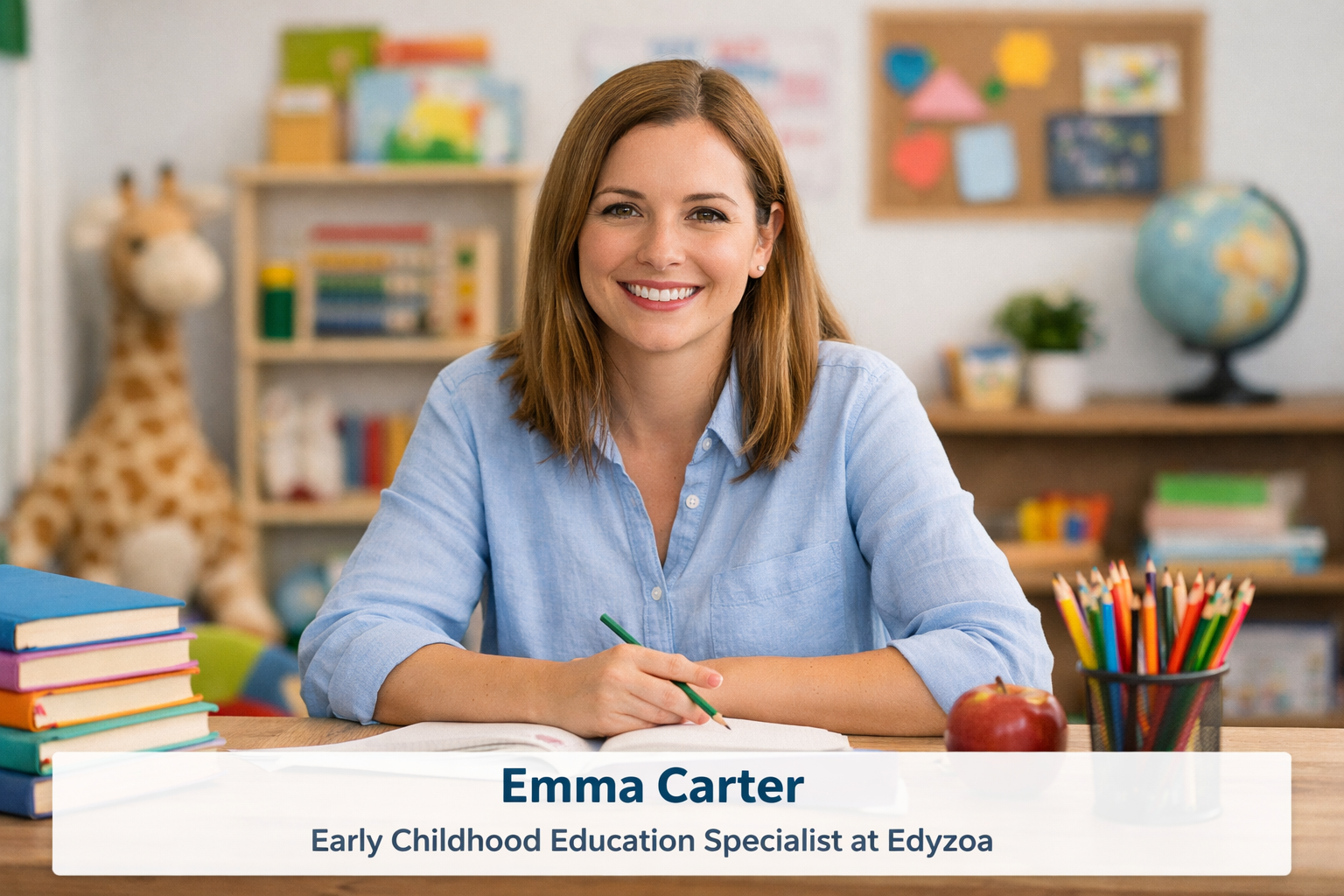
Emma Carter is an early childhood education enthusiast and content creator at Edyzoa. She is passionate about helping children learn through fun, engaging, and safe educational resources that support creativity, curiosity, and skill development.