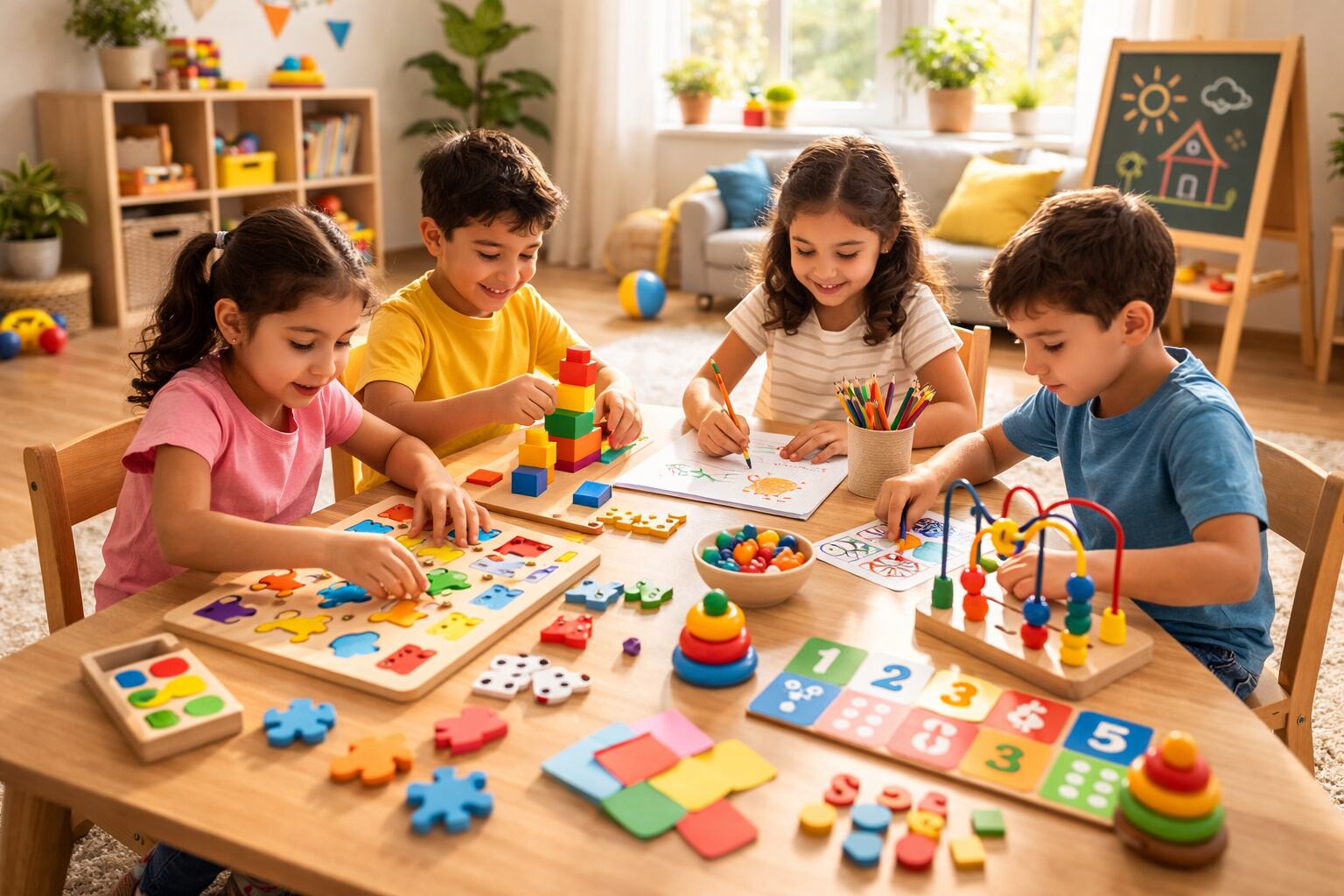
The modern home can transform into a vibrant hub of learning and exploration with the strategic integration of engaging indoor educational games. Gone are the days when learning was confined to textbooks and formal classroom settings. Today, parents and educators are discovering the immense power of play in fostering intellectual curiosity and academic development. Making learning fun at home isn’t just about entertainment; it’s about building a strong foundation for lifelong learning. By transforming everyday activities and dedicated playtime into opportunities for growth, we can cultivate a generation of enthusiastic and capable learners.
We cannot overstate the importance of indoor educational games for kids. They provide a safe and nurturing environment for children to experiment, make mistakes, and learn from them without the pressures often associated with traditional schooling. This hands-on approach to learning allows children to grasp abstract concepts more readily and develop a deeper understanding of various subjects. Furthermore, these games can significantly boost a child’s confidence and self-esteem as they overcome challenges and achieve learning objectives through play.
Children are naturally curious and driven by a desire to explore and understand the world around them. Indoor educational games tap into this innate curiosity, making the learning process feel less like a chore and more like an adventure. This is particularly crucial for younger children who are in the formative stages of their cognitive development. For preschoolers, the world is a vast and exciting place, and they learn best through sensory experiences and active engagement. Educational games provide precisely this, offering a multi-sensory approach that caters to different learning styles. The ability to manipulate objects, participate in imaginative scenarios, and engage with challenges directly through play solidifies learning in a way that passive observation rarely can.
Building Crucial Developmental Skills Through Play
Beyond academic knowledge, indoor educational games are instrumental in fostering a range of essential developmental skills. From fine motor skills developed through manipulating game pieces to the development of crucial social skills like turn-taking, cooperation, and communication when playing with siblings or friends, the benefits are far-reaching. Problem-solving is another area where these games shine, encouraging children to think critically, strategise, and adapt their approaches as they encounter new situations. This nurtures resilience and a growth mindset, vital attributes for navigating future academic and life challenges. The sheer excitement and reward of successfully completing a game objective can be a powerful motivator, reinforcing the idea that learning is enjoyable and rewarding.
Enhancing Cognitive Abilities and Memory Retention
The cognitive benefits of engaging in structured play are profound. Educational games often require children to remember rules, recall information, and apply learned concepts in new contexts. This constant mental exercise strengthens memory retention and improves overall cognitive function. For instance, a memory matching game not only enhances recall but also develops visual discrimination skills. Similarly, games that involve pattern recognition or sequencing help children develop logical reasoning and an understanding of order. The act of actively participating and making decisions within the game framework promotes deeper processing of information, leading to more robust and enduring learning compared to rote memorisation.
The beauty of indoor educational games lies in their adaptability. They can be seamlessly integrated into daily routines and existing play scenarios, blurring the lines between fun and learning. The key is to be creative and observant, identifying opportunities to introduce educational elements into activities that children already enjoy.
DIY Games: Unleashing Your Inner Educator
A fantastic way to make learning fun is through the creation of your own educational games, or DIY (Do It Yourself) games. This not only saves on costs but also allows for complete customisation to suit your child’s specific interests and learning needs. Simple household items can be transformed into powerful learning tools. For example, old boxes can become elaborate building blocks for a geometry lesson, or a simple deck of cards can be used for math games. The process of creating these games also becomes a learning experience in itself, fostering creativity and problem-solving skills for both the child and the parent.
Crafting Learning Through Household Materials
Imagine transforming cereal boxes into a magnificent castle that teaches about historical architecture, or using painted rocks to create a number line for early maths practice. The possibilities are endless when you start looking at everyday objects with a pedagogical lens. This approach encourages resourcefulness and teaches children that learning can happen anywhere, with anything. It empowers them to be creators of their own learning experiences, fostering a sense of ownership and engagement.
The Power of Storytelling and Imaginative Play
Storytelling is a powerful tool for learning, and incorporating it into games can significantly enhance a child’s comprehension and creativity. Games that involve narrative elements, such as role-playing or board games with story components, encourage children to develop plots, character development, and descriptive language. Imaginative play, often at the heart of childhood, can be easily infused with educational themes. Turning a simple blanket fort into an ancient Egyptian tomb or a kitchen into a bustling science laboratory can spark curiosity and encourage children to learn through exploration and role-playing.
Developing Language and Social Skills Through Role-Play
Role-playing games are particularly effective for developing language and social skills. When children take on different characters, they practise empathy, learn to negotiate social dynamics, and expand their vocabulary. A pretend grocery store can teach about money and consumerism, while a doctor’s office scenario can help children understand basic health concepts and reduce anxiety about medical visits. The ability to step into someone else’s shoes and navigate a created scenario is a fundamental life skill nurtured through this type of play.
The effectiveness of an educational game is highly dependent on its suitability for the child’s age and developmental stage. What might be engaging and challenging for a five-year-old could be overwhelming or uninteresting for a two-year-old, and vice versa for a ten-year-old. Understanding these developmental milestones is key to selecting games that offer the right balance of challenge and enjoyment.
Games for the Early Years: Preschoolers and Beyond
For preschoolers, the focus on foundational skills is paramount. Games should be hands-on, visually stimulating, and involve simple rules. Activities that promote sensory exploration, early literacy, and basic numeracy are ideal. Building blocks, shape sorters, and simple puzzles are excellent for developing fine motor skills and spatial reasoning. Early reading games that involve letter recognition, phonics, and matching words to pictures can build a strong foundation for literacy. Counting games with tangible objects, colour-sorting activities, and basic pattern recognition exercises are perfect for introducing mathematical concepts in a playful manner.
Developing Foundational Literacy and Numeracy
In the preschool years, games that introduce letters, sounds, and early reading concepts are invaluable. Magnetic letters that can be arranged to form words, simple rhyming games, and interactive storybooks that encourage participation all contribute to literacy development. For numeracy, games involving counting objects, identifying numbers, and simple addition or subtraction using manipulatives like counting bears or dice are highly effective. The goal is to make these concepts tangible and fun, dispelling any potential fear or intimidation associated with them.
Games for Older Children: Cultivating Critical Thinking
As children mature, their cognitive abilities expand, allowing for more complex and challenging games. Older children benefit from games that encourage critical thinking, problem-solving, logic, and strategic planning. Board games that involve strategy, deduction, or resource management are excellent for this age group. Puzzles that require multi-step thinking and the ability to see the bigger picture are also beneficial. Games that introduce coding concepts in a simplified way, or those that challenge children to design and build solutions, can foster valuable STEM skills.
Fostering Strategic Thinking and Planning
For older elementary and middle schoolers, games that require strategic planning and foresight become increasingly important. Chess, checkers, or even more complex strategy board games encourage players to think several steps ahead, anticipate opponents’ moves, and adapt their own tactics. This develops foresight, decision-making skills, and the ability to manage resources effectively. The satisfaction of outmanoeuvring an opponent or successfully executing a complex strategy is a powerful motivator for continued engagement and learning.
The physical and emotional environment at home plays a significant role in a child’s willingness to engage with educational activities. Creating a space that is conducive to learning and play, and fostering a positive attitude towards education, is as important as the games themselves.
The Power of a Dedicated Learning Space
Having a designated area for learning and play, even if it’s a small corner, can make a considerable difference. This space should be organised, inviting, and equipped with age-appropriate educational resources. A well-stocked bookshelf, art supplies, building materials, and a variety of educational games readily accessible can encourage independent exploration and learning. This dedicated space signals to the child that learning is an important and valued part of their life, and it provides a sense of order and belonging for their educational pursuits.
Organizing Resources for Easy Access and Inspiration
Keeping educational materials organised and easily accessible is key to encouraging spontaneous learning. A clear system for storing books, games, and art supplies allows children to find what they need independently, fostering self-reliance. Rotating toys and games can also maintain novelty and excitement, preventing boredom and rediscovering forgotten treasures. A visually appealing display of their creations can also serve as a constant source of pride and motivation.
Cultivating a Positive Attitude Towards Learning
The most impactful element of a learning-focused environment is not physical but emotional. Parents and carers play a crucial role in shaping a child’s attitude towards learning. By showing enthusiasm for learning ourselves, celebrating effort and progress, and framing challenges as opportunities for growth, we can instill a lifelong love of learning in our children. Avoiding pressure and criticism, and instead focusing on encouragement and positive reinforcement, creates a safe space for children to explore and learn without fear of failure.
Encouraging Curiosity and a Growth Mindset
Open-ended questions, genuine interest in their discoveries, and encouragement to explore their questions are vital. When mistakes happen, framing them as learning opportunities rather than failures is essential for cultivating a growth mindset. This teaches children that intelligence and abilities can be developed through dedication and hard work, rather than being fixed traits. The emphasis should always be on the process of learning and the joy of discovery, rather than solely on the outcome.
Preschoolers are at a magical stage of development where their imagination is boundless and their capacity for absorbing new information is immense. Educational games for this age group should be vibrant, tactile, and designed to capture their attention through play.
Building Blocks and Construction Toys
Beyond simple stacking, building blocks and construction toys offer a wealth of learning opportunities. They enhance fine motor skills, hand-eye coordination, and spatial reasoning. As children build taller towers, more complex structures, or even create entire cities, they are implicitly learning about balance, gravity, and engineering principles. Introducing different shapes and colours within block sets further aids in early shape and colour recognition.
Exploring Shapes, Colors, and Spatial Relationships
Engaging with various shapes and colours through building provides a concrete way for preschoolers to understand these fundamental concepts. They learn to identify and name different geometric shapes, distinguish between primary and secondary colours, and begin to develop an understanding of how objects fit together in three-dimensional space. This hands-on exploration of spatial relationships is a crucial precursor to later mathematical and scientific understanding.
Sensory Play and Exploration
Sensory bins filled with rice, beans, sand, or water, along with various tools like scoops, cups, and funnels, provide a rich environment for tactile exploration and learning. These activities can be themed to introduce concepts like counting, sorting, or even basic science through observation of how different materials behave. For example, a bin filled with water and different objects can lead to discussions about floating and sinking.
Developing Fine Motor Skills and Early Science Concepts
The act of scooping, pouring, and manipulating materials in a sensory bin significantly strengthens fine motor skills, essential for tasks like writing and drawing. Furthermore, these play scenarios offer natural opportunities to introduce early science concepts. Observing how water fills a container, how sand flows, or how different textures feel stimulates curiosity and encourages early scientific inquiry.
Early Literacy and Numeracy Games
Simple matching games, letter puzzles, and interactive storybooks are excellent for preschoolers. Games that involve rhyming, identifying sounds, and recognising letters can build a strong foundation for reading. Similarly, counting games with tangible objects, sorting by quantity, and recognising numbers visually reinforce early numeracy skills. The key is to make these activities engaging and playful, embedding learning within fun.
Interactive Storytelling and Rhyming Activities
Interactive storytelling, where children are encouraged to participate by asking questions, making predictions, or filling in missing words, significantly enhances comprehension and language development. Rhyming activities, such as singing songs with repetitive rhymes or playing rhyming word games, help children develop phonological awareness, a critical skill for reading. These activities combine auditory learning with active participation, making them highly effective.
As children grow, the need for games that challenge their minds and foster higher-order thinking skills becomes increasingly important. Critical thinking and problem-solving are not just academic skills; they are essential life skills that empower individuals to navigate complex situations and make informed decisions.
Logic Puzzles and Deduction Games
Logic puzzles, such as Sudoku for kids, pattern completion tasks, and “who am I?” style deduction games, are fantastic for honing critical thinking. These games require children to analyse information, identify patterns, make inferences, and eliminate possibilities to arrive at a solution. This systematic approach to problem-solving builds analytical skills and trains the brain to think logically.
Analyzing Information and Drawing Conclusions
The process of solving a logic puzzle encourages children to break down a problem into smaller parts, examine each piece of information carefully, and then synthesise that information to form a conclusion. This analytical approach is transferable to academic subjects like maths and science, as well as to everyday decision-making processes. Learning to identify relevant information and discard irrelevant details is a crucial outcome of engaging with these games.
Strategy Board Games
Many board games are designed to encourage strategic thinking. Games like chess, Connect Four, or even cooperative strategy games, where players work together towards a common goal, all require planning, foresight, and adaptation. Players must anticipate potential outcomes, weigh different options, and make decisions that will best serve their objectives. This develops the ability to think strategically and to adapt plans in response to changing circumstances.
Planning Ahead and Adapting to New Challenges
The act of strategising in board games teaches children the importance of looking ahead and considering the consequences of their actions. They learn to set goals, develop plans to achieve them, and adjust those plans as the game progresses. This ability to adapt to new challenges and unforeseen circumstances is a vital skill for success in all areas of life, from academic pursuits to personal relationships.
STEM-Focused Games and Activities
Incorporating Science, Technology, Engineering, and Mathematics (STEM) concepts into games is an excellent way to promote critical thinking and problem-solving. Building challenges, coding games, and hands-on science experiments presented in a game format can ignite curiosity and encourage scientific inquiry and innovative thinking. These activities often involve experimentation, hypothesis testing, and iterative design, all core components of problem-solving.
Experimentation and Iterative Design
STEM games often involve a cycle of experimentation, observation, and design refinement. Children learn to form hypotheses, test them through experimentation, analyse the results, and then modify their designs or approaches based on what they’ve learned. This iterative process mirrors real-world scientific and engineering practices and fosters resilience, as well as a deep understanding of how things work.
The integration of STEM (Science, Technology, Engineering, and Mathematics) into indoor playtime is no longer a niche interest but a vital component of preparing children for a future driven by innovation and technology. Fortunately, STEM learning doesn’t require expensive equipment or specialised environments; it can be woven seamlessly into everyday play.
Hands-On Science Experiments
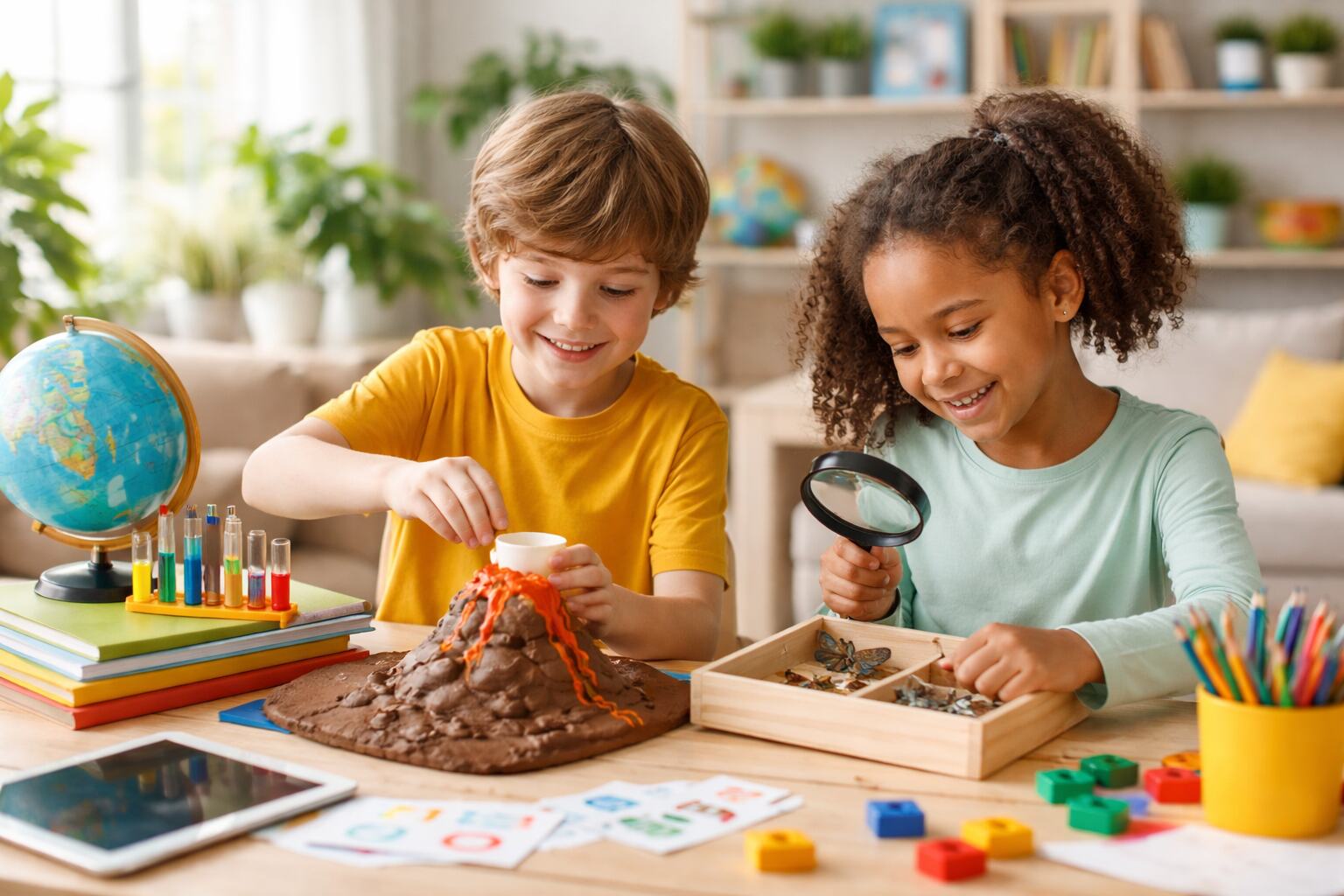
Simple science experiments can be transformed into engaging games. Building a volcano with baking soda and vinegar, creating a simple circuit with batteries and bulbs, or exploring density with layers of liquids are all exciting ways to introduce scientific principles. These activities encourage observation, hypothesis testing, and a hands-on understanding of scientific phenomena, making abstract concepts tangible and memorable. The element of surprise and discovery inherent in science experiments makes them particularly captivating for children.
Observing, Questioning, and Discovering
The core of scientific inquiry lies in observation and questioning. When children engage in hands-on experiments, they are naturally encouraged to observe what happens, ask “why?” and “how?”, and seek to discover the underlying principles. This fosters a curious mindset and a natural inclination towards scientific exploration, laying the groundwork for future learning in STEM fields. The excitement of a successful experiment can be a powerful motivator for further scientific investigation.
Building and Engineering Challenges
Providing children with materials like LEGOs, K’nex, recycled cardboard, or even simple craft supplies can fuel creative engineering challenges. Challenges could involve building the tallest tower, a bridge that can hold a certain weight, or a vehicle that can roll a specific distance. These activities develop spatial reasoning, problem-solving skills, and an understanding of basic engineering principles such as stability, balance, and structural integrity.
Designing, Constructing, and Testing Solutions
Engineering challenges encourage children to think like engineers: identify a problem or a goal, design a solution, construct it, and then test its effectiveness. This iterative process of design, build, and test is fundamental to engineering and teaches valuable lessons about persistence, experimentation, and the refinement of ideas. The satisfaction of seeing their creation successfully meet a challenge is incredibly rewarding.
Introducing Coding Concepts Through Play
Even at a young age, coding concepts can be introduced through unplugged games or age-appropriate coding apps and robots. Unplugged coding activities involve using sequences of directions or commands to guide a character or object, teaching logical sequencing and algorithmic thinking. Robots that can be programmed with simple commands or apps that use visual block-based coding can introduce children to the fundamentals of computer programming in a fun and interactive way, demystifying technology and fostering computational thinking.
Developing Algorithmic Thinking and Sequential Logic
Coding games, whether physical or digital, inherently teaches algorithmic thinking and sequential logic. Children learn to break down tasks into smaller, manageable steps and then arrange those steps in the correct order to achieve a desired outcome. This ability to think in a structured, logical manner is invaluable not only for computer science but also for problem-solving in countless other domains.
In an era dominated by digital screens, the humble board game has resurfaced as a powerful tool for education and family bonding. Educational board games offer a unique blend of fun and learning, providing numerous benefits for children of all ages.
Enhancing Social Skills and Cooperation
Many board games require players to interact, communicate, and cooperate with each other (or compete in a friendly manner). Learning to take turns, follow rules, communicate strategies, and manage emotions like winning and losing gracefully are invaluable social skills honed through board game play. Cooperative board games, where players work together to achieve a common goal, are particularly effective in fostering teamwork and a sense of shared responsibility.
Turn-Taking, Negotiation, and Sportsmanship
The structured nature of board games provides a perfect training ground for essential social behaviours. Children learn the importance of waiting for their turn, understanding and adhering to rules, and engaging in negotiation when necessary. They also learn valuable lessons in sportsmanship, experiencing the highs of victory and the humility of defeat, which are crucial for developing emotional resilience and a healthy competitive spirit.
Developing Critical Thinking and Strategic Planning
As previously discussed, many board games are inherently designed to stimulate critical thinking and strategic planning. Players must analyse the game state, anticipate opponents’ moves, make calculated decisions, and adapt their strategies as the game unfolds. This mental exercise sharpens cognitive skills and teaches children to think ahead, weigh consequences, and make informed choices. The immediate feedback loop of a board game provides clear consequences for strategic decisions, reinforcing learning.
Analyzing Game Mechanics and Making Informed Decisions
The process of playing a board game involves understanding its rules and mechanics, assessing the current situation, and then devising a plan to achieve victory. This requires analytical skills, the ability to identify patterns and opportunities, and the capacity to make informed decisions under varying circumstances. The game provides a low-stakes environment for practising these decision-making skills, which are highly transferable to academic and real-world challenges.
Promoting Family Bonding and Communication
Board games offer a wonderful opportunity for families to spend quality time together, away from distractions. Playing a game together creates shared experiences, sparks conversations, and strengthens family bonds. It provides a relaxed and enjoyable setting for parents to connect with their children on a different level, observing their problem-solving approaches and engaging in friendly banter. This shared experience fosters a sense of unity and belonging within the family unit.
Creating Shared Experiences and Strengthening Relationships
The act of gathering around a table to play a board game creates a special kind of family ritual. It provides dedicated time for interaction, laughter, and shared challenges. These positive experiences build lasting memories and contribute to a strong, supportive family environment. The shared enjoyment and occasional friendly rivalry over a game can be a powerful glue that holds families together.
Technology, when used thoughtfully and strategically, can be a powerful amplifier for educational gaming at home. It can introduce new dimensions of interactivity, personalised learning, and access to a vast array of resources that might otherwise be unavailable.
Educational Apps and Online Platforms
There is a vast and ever-growing landscape of educational apps and online platforms designed to make learning engaging and interactive. These resources can cover a wide range of subjects, from maths and language arts to science and coding. Many of these platforms offer adaptive learning features, which adjust the difficulty and content based on the child’s progress, ensuring they are consistently challenged and supported. The gamified nature of many of these apps, incorporating points, rewards, and leaderboards, can significantly boost motivation.
Adaptive Learning and Personalized Learning Paths
One of the most significant advantages of technology in educational gaming is its ability to offer personalised learning paths. Adaptive learning systems can identify a child’s strengths and weaknesses, providing targeted exercises and content to address specific needs. This ensures that each child receives an education tailored to their individual pace and learning style, maximising their potential for growth and preventing frustration or boredom. The ability to revisit concepts or move ahead when mastery is achieved is a hallmark of effective online educational tools.
Interactive Learning Games and Simulations
Beyond simple apps, advanced technology enables the creation of immersive interactive learning games and simulations. Virtual reality (VR) and augmented reality (AR) experiences can transport children to historical periods, explore the human body from the inside, or conduct complex science experiments in a safe, virtual environment. These technologies offer an unparalleled level of engagement and understanding by allowing children to experience concepts in a visceral way that transcends traditional learning methods.
Immersive Experiences and Virtual Exploration
Imagine exploring ancient Rome as if you were there or dissecting a virtual frog without any mess or ethical concerns. VR and AR technologies provide these kinds of deeply immersive experiences that can bring abstract concepts to life. This vivid exploration fosters a deeper understanding and retention of information, making learning memorable and exciting. The ability to interact with virtual environments and objects stimulates curiosity and encourages active participation.
Gamified Learning Platforms for Skill Development
Many platforms utilise gamification principles to teach specific skills. These can include timed math challenges, spelling bees with leaderboards, or coding games that require players to solve puzzles using programming logic. The competitive and reward-based nature of these platforms can be highly motivating for children, encouraging them to practise and improve their skills consistently. The immediate feedback and visible progress offered by gamified systems can foster a strong sense of accomplishment and drive.
Motivating Practice Through Rewards and Challenges
The incorporation of points, badges, levels, and leaderboards transforms practice into an engaging challenge. Children are motivated by the desire to achieve new milestones, unlock new levels, and compare their progress with peers. This gamified approach can make even repetitive skill-building exercises enjoyable, leading to greater practice and ultimately, improved mastery of the subject matter. It shifts the perception of practice from a chore to an engaging pursuit.
The brilliance of DIY educational games lies in their affordability, adaptability, and the incredible sense of accomplishment they bring when created by hand. Turning everyday objects into learning tools sparks creativity and teaches children that learning can be a wonderfully hands-on and personal experience.
Cardboard Creations for Math and Literacy
Old cardboard boxes are goldmines for educational game creation. They can be transformed into a giant alphabet board where children match letters, a life-sized number line for counting and simple arithmetic, or even elaborate structures that teach about geometry and spatial reasoning. Cut out shapes to create matching games, or paint numbers and letters onto boxes for sorting and sequencing activities. The possibilities are limited only by imagination.
Alphabet and Number Games from Recycled Materials
Making an alphabet matching game from decorated cardboard pieces, where children match uppercase and lowercase letters, or a number recognition game by cutting out numbers and having children match them to corresponding dots or quantities, is both economical and highly effective for early learning. These tactile games reinforce visual recognition and the foundational concepts of literacy and numeracy in a playful way.
Nature-Inspired Learning Games
Bring the outdoors in by incorporating natural elements into educational games. Collections of leaves, rocks, or pinecones can be used for sorting by size, colour, or texture, teaching observation and classification skills. Create rubbings of different leaves for art and science lessons about plant identification. A simple nature scavenger hunt around the house, with clues that involve counting or identifying colours, can also be a fun way to combine outdoor exploration with learning.
Sorting, Classifying, and Observing Natural Objects
Using natural objects for games encourages children to observe, classify, and compare different items. Sorting leaves by their shape or the number of points, or arranging rocks by their size and colour, develops critical thinking and observational skills. This connection with nature also fosters an appreciation for the environment and provides ample opportunities for scientific discovery.
Storytelling and Role-Playing Props
Creating simple props for storytelling and role-playing can unlock a child’s imagination and facilitate learning. A decorated cardboard tube can become a spyglass for an explorer role-play, or a collection of different fabrics can be used to create costumes for historical reenactments. Puppets made from socks or paper bags can be used to act out stories, helping children develop narrative skills and practise dialogue.
Crafting Simple Props to Ignite Imagination
The act of crafting these props can be a learning experience in itself, fostering fine motor skills and creativity. Once created, these simple props become powerful tools for imaginative play, allowing children to step into different roles, create their own narratives, and explore various scenarios. This enhances language development, social skills, and the ability to think creatively.
Sensory Bins with Educational Themes
Sensory bins are not just for tactile exploration; they can be themed to incorporate educational content. A bin filled with dried beans and small plastic animals can be used for counting and sorting. A bin with dyed rice and letter cutouts can make practising letter recognition more engaging. Adding scoops, cups, and funnels enhances fine motor skills and encourages exploration of concepts like volume and capacity.
Exploring Concepts Through Tactile Play
Sensory bins offer a unique opportunity to explore concepts through touch and manipulation. Whether it’s using tiny scoops to transfer beads for a counting game or burying letter shapes in a bin for a letter hunt, the tactile engagement strengthens memory and understanding. This multi-sensory approach is particularly beneficial for young learners, making abstract ideas more concrete and accessible.