
The Best Memory Games to Help Kids Improve Focus and Concentration
Memory is the bedrock of learning, problem-solving, and everyday functioning. For children, developing a strong memory is not just about recalling facts; it’s about building the cognitive architecture necessary for academic success, social interaction, and overall well-being. Memory games, far from being just a playful pastime, are powerful tools that can significantly enhance a child’s focus, concentration, and cognitive abilities.
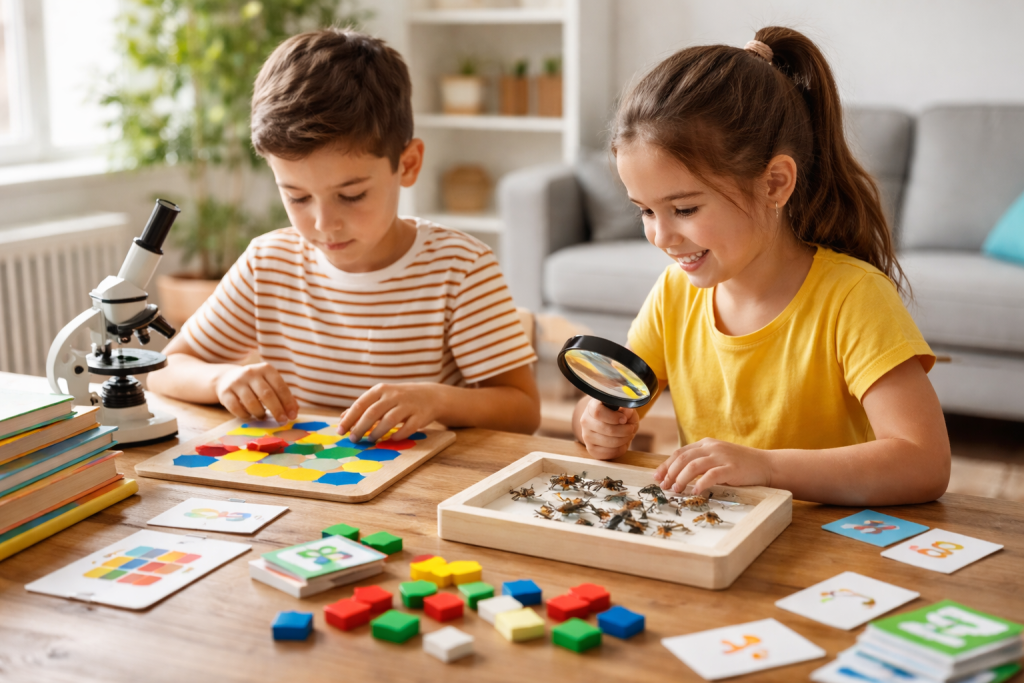
Memory games provide a wealth of benefits for children at different stages of their development. They are not merely entertaining; they are strategically designed to stimulate and strengthen crucial brain functions.
Contents
- 1 Sharpening Focus and Concentration
- 2 Boosting Problem-Solving Skills
- 3 Enhancing Cognitive Development
- 4 Cultivating Patience and Perseverance
- 5 Classic Matching Card Games
- 6 “Simon Says”
- 7 “What’s Missing?”
- 8 Story Sequence Games
- 9 “I Spy” Color/Object Memory Game
- 10 Strengthening Neural Pathways
- 11 Boosting Working Memory
- 12 Developing Executive Functions
- 13 Game-Based Learning at Home
- 14 Incorporating Games into Academic Tasks
- 15 Travel and Waiting Time Activities
- 16 Fostering Social Skills and Emotional Regulation
- 17 Building Self-Esteem and Confidence
Sharpening Focus and Concentration
In a world filled with digital distractions, cultivating focus and concentration in children is more important than ever. Memory games inherently demand sustained attention. To succeed, children must pay close heed to details, track information, and resist impulsivity. This consistent practice translates into improved ability to concentrate on other tasks, whether it’s listening to a teacher, completing homework, or engaging in a conversation. The act of searching for pairs, remembering sequences, or recalling specific items trains the brain to filter out irrelevant stimuli and zero in on the task at hand.
Boosting Problem-Solving Skills
Beyond simple recall, many memory games subtly introduce elements of problem-solving. Children might need to strategise the order in which they reveal cards, deduce patterns, or make educated guesses based on partially revealed information. This iterative process of trial and error, analysis, and adjustment strengthens their logical reasoning and critical thinking skills. It teaches them to think ahead, anticipate outcomes, and adapt their approach, all vital components of effective problem-solving.
Enhancing Cognitive Development
The brain is like a muscle; the more it’s exercised, the stronger it becomes. Memory games provide this crucial workout for a child’s brain. They stimulate the hippocampus, the area of the brain largely responsible for memory formation, and the prefrontal cortex, which governs executive functions like planning, decision-making, and working memory. Regular engagement with these games can lead to tangible improvements in a child’s processing speed, information retention, and overall cognitive flexibility.
Cultivating Patience and Perseverance
Memory games, especially those with increasing levels of difficulty, naturally foster patience and perseverance. Children learn that success often comes after multiple attempts and that it’s important not to give up when faced with a challenge. They experience the satisfaction of overcoming obstacles, which in turn builds resilience and a positive attitude toward learning. This invaluable life skill extends far beyond the game board, impacting their approach to schoolwork, sports, and future endeavours.
Introducing memory games early can lay a strong foundation for future learning. These games are simple to understand and highly effective for developing cognitive skills in preschoolers and early elementary children.
Classic Matching Card Games
The quintessential memory game, matching card games —involves a set of cards with identical pairs. Children flip two cards at a time, trying to find a match. If they don’t match, the cards are flipped back over, and the child must remember their locations for future turns. The sheer simplicity makes it accessible, while the increasing number of cards can challenge older children. Themes featuring animals, shapes, or story characters add to the appeal.
“Simon Says”
This spoken word game is a fantastic way to develop auditory memory and sequential processing. An adult or leader gives commands, prefaced by “Simon says”, and children must only follow those commands. Commands without “Simon says” must be ignored. As children grow, the command sequences can become longer and more complex, demanding greater focus and recall. It’s a game that can be played anywhere, requiring no physical props.
“What’s Missing?”
This game is an excellent tool for enhancing visual memory and sharpening attention to detail. Several objects are placed on a tray or table. Children observe them carefully and then close their eyes. An adult removes one or more objects, and the children must identify what’s gone. The number and similarity of objects can be adjusted to match the child’s age and ability. This game hones observation skills and the ability to retrieve details from memory.
Story Sequence Games
These games involve a series of picture cards that tell a story when arranged in the correct order. Children must analyse the images, understand the narrative flow, and then sequence them logically. This sort of activity not only strengthens memory but also develops narrative comprehension, vocabulary, and early literacy skills. They learn about cause and effect and the structure of storytelling.
“I Spy” Color/Object Memory Game
A playful variation of the traditional “I Spy”. Instead of just identifying, the adult says, “I spy with my little eye something…” and then a description (e.g., “blue” or “soft”). The child must then recall all the blue or soft items they have recently observed in the room or surroundings. This encourages active observation and recall of previously seen items, making it excellent for working memory.
The efficacy of memory games is not just anecdotal; it’s supported by neuroscience. These games actively engage crucial brain regions and cognitive processes.
Strengthening Neural Pathways
Every time a child plays a memory game, new neural connections are formed and existing ones are strengthened. Repetitive engagement in tasks that require recall, pattern recognition, and sequencing reinforces the pathways within the brain associated with these functions. This increased connectivity leads to more efficient brain processing and improved cognitive performance across the board.
Boosting Working Memory
Working memory, often described as the brain’s “mental workspace”, is critical for tasks like understanding instructions, solving math problems, and following conversations. Memory games, especially those that require holding multiple pieces of information in mind simultaneously (like remembering several card locations or a sequence of instructions), directly train and enhance working memory capacity. A stronger working memory allows children to process more information at once and maintain focus for longer periods.
Developing Executive Functions
Beyond memory itself, these games are instrumental in developing executive functions – the high-level cognitive skills that control and coordinate other cognitive abilities. This includes skills like inhibitory control (resisting distractions), cognitive flexibility (adapting to new information), and planning. When a child decides which cards to flip next or how to respond in “Simon Says”, they are actively exercising these executive functions, which are vital for academic success and life skills.
Making memory games a regular part of a child’s routine doesn’t require structured lessons or dedicated screen time. They can be subtly woven into everyday activities.
Game-Based Learning at Home
Dedicate specific times for family game nights featuring memory games. Use them as quick brain breaks between homework sessions. Even simple activities like asking a child to remember a grocery list when at the store, or recalling the order of events from their day, can act as informal memory exercises. Board games like “Memory” or “Concentration” are readily available and provide excellent structured play.
Incorporating Games into Academic Tasks
Memory games can directly support academic learning. For instance, when learning vocabulary, create matching games with words and their definitions. For history, use timeline sequencing games. In science, relate animals to their habitats or processes to their outcomes. This makes learning more interactive and less like rote memorisation, helping children internalise information more effectively.
Travel and Waiting Time Activities
Memory games are perfect for keeping children engaged during travel or while waiting for appointments. No-prop games like “I Spy” variations, or simple verbal sequence games, can turn potentially frustrating downtime into an opportunity for cognitive development. Small, portable card games are also excellent for these situations.
The impact of memory games extends beyond academic and cognitive benefits, contributing significantly to a child’s holistic development.
Fostering Social Skills and Emotional Regulation
Playing many memory games with others fosters crucial social skills. Children learn about taking turns, sharing, and gracefully accepting wins and losses. They develop empathy as they interact with peers and learn to understand different perspectives. The challenge and mild frustration inherent in some games also help children practise emotional regulation, learning to manage their feelings when things don’t go their way.
Building Self-Esteem and Confidence
As children successfully complete memory game challenges, they experience a sense of accomplishment. This positive reinforcement builds self-esteem and confidence in their cognitive abilities. They learn that their efforts lead to success, which encourages them to take on new challenges and believe in their capacity to learn and grow. The joy of solving a puzzle or finding a match can be incredibly empowering.
In conclusion, memory games are far more than just fun activities. They are powerful tools for nurturing critical cognitive skills, enhancing academic performance, and supporting a child’s overall development. By thoughtfully incorporating these games into a child’s daily routine, parents and educators can lay a robust foundation for a lifetime of learning and success, ensuring that young minds are not only entertained but also continually challenged and strengthened.

Emma Carter is an early childhood education enthusiast and content creator at Edyzoa. She is passionate about helping children learn through fun, engaging, and safe educational resources that support creativity, curiosity, and skill development.