
Time Flies: Effective Strategies for Teaching Kids About Time
Time, a constant flux, an invisible river that carries us all forward, can be an abstract concept for young minds. Yet, understanding this fundamental dimension of existence is crucial for a child’s development, shaping their ability to navigate the world, learn, and grow. Time passes swiftly, and for children, comprehending this concept necessitates patience, creativity, and a methodical approach. This article explores effective strategies for teaching kids about time, from the foundational understanding of its passage to the development of essential time management skills.
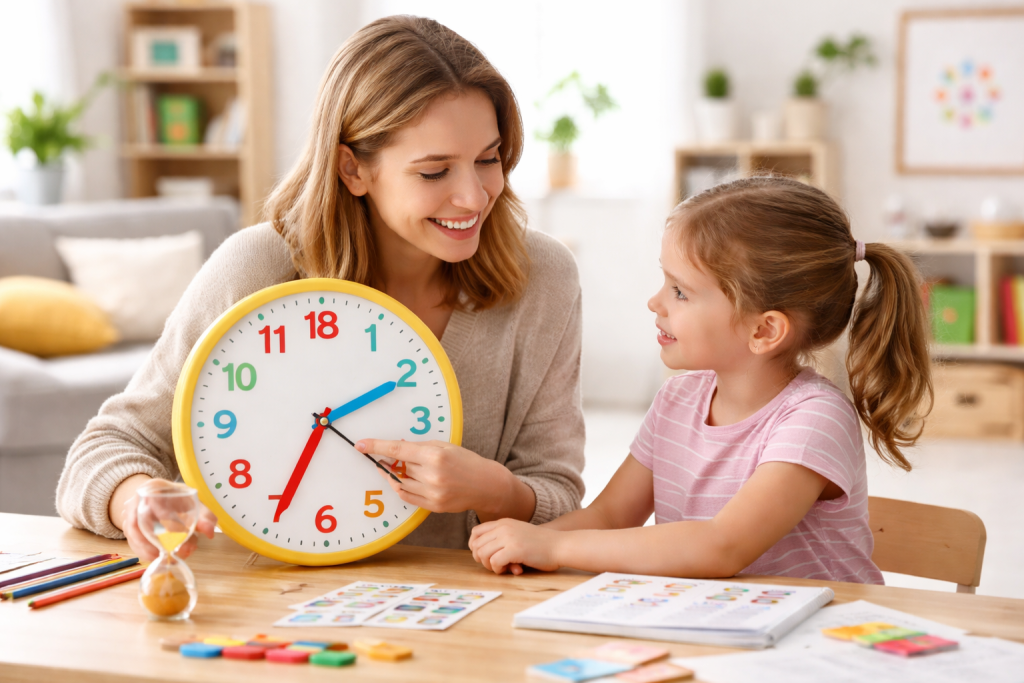
At its core, teaching children about time involves helping them conceptualise its relentless yet predictable flow. It’s about the progression of events, the duration of activities, and the fabric of their experiences, not just clocks and calendars.
Contents
- 1 The Abstract Nature of Time for Children
- 2 Sequencing and Chronological Order
- 3 Duration and Pace
- 4 Preparing for School and Academics
- 5 Developing Independence and Responsibility
- 6 Fostering Self-Regulation and Planning
- 7 Toddlers and Preschoolers: The Concrete Experience
- 8 Early Elementary: Introducing Tools and Concepts
- 9 Upper Elementary and Beyond: Advanced Concepts and Application
- 10 Synchronizing Activities with Clocks and Schedules
- 11 Making Time Tangible Through Visuals
- 12 The Power of Storytelling and Games
- 13 Understanding the Present Moment
- 14 Learning from the Past, Remembering Experiences
- 15 Envisioning and Planning the Future
- 16 Breaking Down Tasks and Estimating Timelines
- 17 Prioritizing and Setting Goals
- 18 Encouraging Self-Discipline and Focus
- 19 Consistency and Repetition
- 20 Patience and Positive Reinforcement
- 21 Modeling Good Time Management
- 22 Making Time Learning Fun and Engaging
The Abstract Nature of Time for Children
For very young children, time is often experienced in the immediate. “Now” is paramount. Concepts like “yesterday”, “tomorrow”, or “next week” can be fuzzy. The abstract nature of time means it cannot be touched, seen, or directly measured in the way a physical object can. This necessitates a gradual introduction, building upon concrete experiences to foster abstract understanding. This involves associating temporal concepts with tangible events and activities they can relate to.
Sequencing and Chronological Order
A critical aspect of understanding time is recognising the order in which events occur. This begins with simple sequences like “first we wake up, then we eat breakfast, then we play.” As children mature, they can grasp more complex narratives and understand cause and effect linked to chronological order. This procedure lays the groundwork for understanding historical events and planning future endeavours.
Duration and Pace
Beyond just the order of events, children need to learn about time duration of time – how long things take. A minute might feel like an eternity waiting for a favourite toy, while an hour of engaging play can vanish in a blink. Understanding that different activities take different amounts of time is a vital skill for setting expectations and managing activities. This knowledge also involves understanding the pace of time, how it can feel faster or slower depending on engagement.
Teaching kids about time is an investment in their future. A strong grasp of temporal concepts empowers them in numerous ways.
Preparing for School and Academics
The school environment is inherently structured around time. Lessons have schedules, assignments have deadlines, and tests are time-bound. Children who understand basic time concepts are better equipped to follow instructions, manage their workload, and feel less anxious about academic demands. This early literacy in time directly contributes to academic success.
Developing Independence and Responsibility
As children grow, understanding time is intrinsically linked to developing independence. Knowing when it’s time to get ready for school, do chores, or practice an instrument fosters a sense of responsibility. It allows them to take ownership of their tasks and build confidence in their ability to manage their lives.
Fostering Self-Regulation and Planning
Time management, a direct outcome of time literacy, is a cornerstone of self-regulation. Children who can estimate how long tasks will take and plan their activities accordingly are better able to control their impulses and resist immediate gratification when a larger goal requires sustained effort. This skill is transferable to all areas of life, from homework to personal projects.
The approach to teaching time must evolve with the child, building upon their cognitive development and interests. What works for a preschooler will be vastly different from what engages an elementary school student.
Toddlers and Preschoolers: The Concrete Experience
The youngest learners best understand time through routine and immediate experience. Daily schedules become their first clocks. Talking about what happens next (“After naptime, we will go to the park”) and using words like “now”, “soon”, and “later” in context helps them build an intuitive sense of temporal progression. Daily routines, predictable and consistent, provide the most fundamental framework for understanding the passage of time.
Daily Routines as Natural Timekeepers
The consistent rhythm of a day – waking up, eating, playing, napping, eating again, bathing, bedtime – forms the bedrock of a toddler’s understanding of time. Describing activities in relation to these routines provides a concrete timeline. For instance, “We’ll have lunch after your nap” connects a future event to a current, understood experience.
Introducing Basic Temporal Language
Simple temporal words become building blocks. “Now” versus “later” helps differentiate immediate desires from future possibilities. “Before” and “after” are essential for sequencing. “Today”, “yesterday”, and “tomorrow” are introduced gradually, often linked to specific events like birthdays or holidays.
Early Elementary: Introducing Tools and Concepts
As children enter school, they begin to encounter clocks, calendars, and more complex schedules. This stage involves introducing the tools and vocabulary of time measurement.
Analog and Digital Clocks as Learning Aids
Introducing both analogue and digital clocks is beneficial. Analogue clocks, with their moving hands, visually represent the passage of time, while digital clocks provide a clear numerical representation. Beginning with hours and then moving to half-hours and quarter-hours, linking them to daily activities, is a common and effective approach.
Calendars and Seasonal Changes
Calendars help children understand longer periods like days, weeks, and months. Discussing upcoming events, marking special days, and observing the progression of dates reinforces the concept of days turning into weeks and weeks into months. Connecting these to seasonal changes further solidifies their understanding of the cyclical nature of time.
Upper Elementary and Beyond: Advanced Concepts and Application
Older children can engage with more abstract concepts like elapsed time, scheduling, and even the historical context of time measurement. They are ready to apply their understanding to more complex tasks.
Understanding Elapsed Time
Calculating how much time has passed between two events is a more advanced skill. This can be practiced with simple scenarios like how long it takes to read a chapter or how much time is left before bedtime, using clocks and even timers.
Exploring Different Time Zones and Historical Timekeeping
For older children, exploring the concept of different time zones can be fascinating; it highlights the universality of time while also emphasising its localised experience. Understanding how people measured time in the past, from sundials to hourglasses, can provide a richer appreciation for modern timekeeping.
The most effective way to teach children about time is not through isolated lessons but by weaving temporal concepts into the rich tapestry of their daily experiences.
Synchronizing Activities with Clocks and Schedules
Beyond just telling time, actively using clocks and schedules to guide activities is key. Setting a timer for homework or screen time, planning family outings according to a schedule, and discussing morning routines in relation to a clock visible in the kitchen all reinforce the practical application of time.
Making Time Tangible Through Visuals
Abstract concepts often benefit from concrete representation, and time is no exception. Visual aids can transform the intangible into something children can see, understand, and interact with.
Visual Timers and Countdown Clocks
These devices are invaluable for younger children struggling with duration. Seeing a coloured segment disappear or a digital countdown shrink provides a clear visual representation of passing time, making it less mysterious and more manageable.
Picture Schedules and Visual Planners
For children who benefit from clear sequencing, picture schedules are a lifeline. They lay out the steps of an activity or the events of a day using icons or simple drawings, allowing children to visually track their progress and anticipate what’s next.
The Power of Storytelling and Games
Learning should be a joyous exploration, and time is no exception. Infusing lessons about time with creativity and playfulness transforms it from a chore into an adventure.
Time-Themed Games and Activities
Games that involve sequencing, matching times, or estimating durations can be incredibly engaging. Simple board games, card games, or even active games like “Red Light, Green Light” can subtly reinforce temporal concepts.
Incorporating Time into Storytelling
Stories can vividly illustrate the passage of time, from the changing seasons in a fairy tale to the historical events recounted in a biography. Discussing the timeline of a story – what happened first, next, and last – reinforces chronological understanding.
Understanding time’s relentless march from past to future is a developmental milestone that underpins a child’s ability to learn from experience and plan for what’s to come.
Understanding the Present Moment
The “now” is the most accessible temporal concept for young children. It is their lived reality. Conversations can focus on what is happening in this very moment, anchoring their perception of time in immediate experience.
Learning from the Past, Remembering Experiences
The past is built from memories. Helping children recall and describe past events—like a birthday party, a family vacation, or even what they had for breakfast yesterday—builds their understanding of “before.” This process strengthens their autobiographical memory and their sense of personal history.
Discussing ‘Yesterday’ and ‘Last Week’
Relating past events to specific days or weeks helps solidify these terms. “Remember last Saturday when we went to the zoo? That was yesterday and the day before yesterday combined in terms of your current weekend.” This gradual build-up of temporal anchors is crucial.
Envisioning and Planning the Future
The future is perhaps the most challenging aspect of time to grasp, but it is essential for goal setting and anticipation. Planned events and goals can help kids think about the future by introducing ideas like “tomorrow,” “next week,” and “next year.”
Talking About ‘Tomorrow’ and ‘Next Week’
Planning a future outing, anticipating a holiday, or discussing what they will do at school next week helps children engage with the concept of future events. Linking these to the calendar reinforces the structured nature of future planning.
Beyond simply understanding time, teaching children how to manage it effectively is a vital life skill that fosters productivity, reduces stress, and builds confidence.
Breaking Down Tasks and Estimating Timelines
Helping children learn to estimate how long a task will take and then break it down into smaller, manageable steps is a fundamental time management technique. This applies to homework, chores, or even creative projects.
Prioritizing and Setting Goals
As children mature, they can begin to understand the concept of prioritising tasks – what needs to be done first? Setting achievable goals, both short-term and long-term, helps them develop a sense of purpose and direction in how they allocate their time.
Encouraging Self-Discipline and Focus
Effective time management requires self-discipline and the ability to focus. It is crucial for children’s productivity and well-being to teach them strategies that minimise distractions and help them stay on task, even when it’s challenging.
Parents and educators share the responsibility of guiding children in their understanding and management of time. A consistent and supportive approach across different environments can significantly enhance their learning.
Consistency and Repetition
Children learn best through consistent exposure and repeated practice. Reinforcing time concepts through daily routines, regular conversations, and varied activities across different settings ensures that the learning becomes ingrained.
Everyday Conversations About Time
Integrating discussions about time into everyday conversations is perhaps the most natural and effective method. You can reinforce temporal awareness by asking, “What time is it now?” before an activity, discussing how long a journey might take, or reflecting on how much time has passed since a significant event.
Patience and Positive Reinforcement
Learning about time is a process, and children will progress at their pace. Patience is paramount, along with celebrating small victories and offering positive reinforcement for effort and progress. Mistakes are opportunities for learning, not setbacks.
Modeling Good Time Management
Children are keen observers, and they learn by watching the adults in their lives. Parents and educators who model good time management themselves – by being punctual, planning effectively, and being mindful of their time – provide powerful real-world examples.
Making Time Learning Fun and Engaging
Ultimately, the most impactful way to teach children about time is to make the process enjoyable. When learning is engaging and fun, children are more motivated to explore, experiment, and ultimately, to understand. Through a combination of structured learning, everyday integration, and playful exploration, we can equip children with the essential skills to navigate the ever-flowing river of time with confidence and competence.

Emma Carter is an early childhood education enthusiast and content creator at Edyzoa. She is passionate about helping children learn through fun, engaging, and safe educational resources that support creativity, curiosity, and skill development.