
Teaching Kids to Think Outside the Box: Nurturing Problem Solving Abilities from a Young Age
The foundation of a successful and fulfilling life is often laid in childhood, not just through academic knowledge, but through the development of critical life skills. One of the most crucial life skills is the capacity to think creatively. This isn’t about being inherently gifted; it’s about cultivating a mindset and a set of skills that empower children to approach challenges with creativity, innovation, and confidence. Nurturing problem-solving abilities from a young age is an investment that pays dividends throughout their lives, equipping them to navigate an ever-changing world with adaptability and resilience.
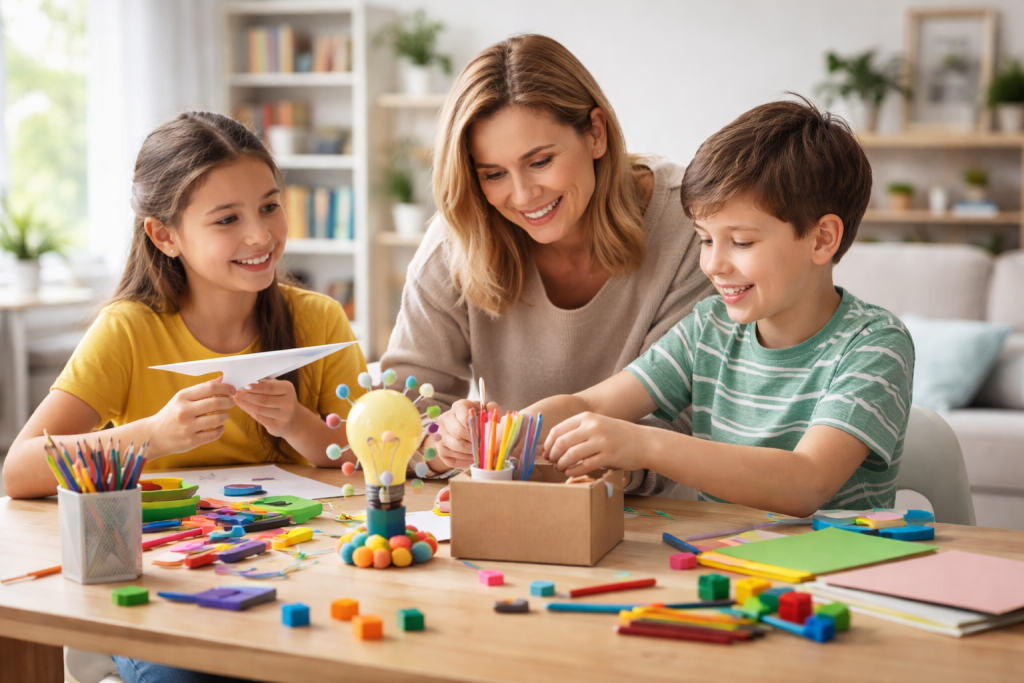
In a world characterised by rapid technological advancement and complex global issues, rote memorisation and rigid adherence to convention are no longer sufficient. The future belongs to those who can analyse, adapt, and create. Teaching children to think creatively provides them with the necessary skills to become resourceful innovators, effective communicators, and confident decision-makers. It transcends the confines of traditional classroom learning, extending into every facet of their personal and professional lives. This ability allows them to not just solve problems as they arise but to anticipate them and to proactively seek novel solutions and opportunities.
Contents
- 1 Understanding the ‘Box’ and How to Step Beyond It
- 2 The Evolving Landscape: Preparing for the Unknown
- 3 The Power of Open-Ended Questions: Sparking Curiosity and Inquiry
- 4 Embracing Mistakes as Stepping Stones: A Growth Mindset in Action
- 5 Collaborative Challenges: Learning Together, Solving Together
- 6 Unstructured Play: The Sandbox for Imagination
- 7 The Joy of Discovery: Encouraging Curiosity and Exploration
- 8 Art and Imagination: Channels for Creative Expression
- 9 Believing in Effort: The Foundation of a Growth Mindset
- 10 Embracing Challenges: The Gateway to Adaptability
- 11 Learning from Setbacks: Building Inner Strength
- 12 Everyday Dilemmas as Learning Opportunities
- 13 Creative Projects and DIY Adventures
- 14 Encouraging Independent Thinking and Decision Making
Understanding the ‘Box’ and How to Step Beyond It
The “box” often represents conventional wisdom, established methods, and the limitations we impose on ourselves due to habit or fear of failure. Thinking outside the box means questioning these assumptions, exploring unconventional angles, and being willing to experiment. It’s about fostering a mental agility that allows individuals to see connections where others see none and to generate ideas that break from the norm. This skill is not about chaos or disregarding logic, but rather about expanding the parameters of possibility.
The Evolving Landscape: Preparing for the Unknown
The jobs of tomorrow may not even exist today. The challenges our children will face will require a degree of ingenuity and adaptability that goes beyond what past generations have known. Fostering their ability to think creatively equips them with the cognitive flexibility necessary to thrive in environments that require constant learning and reinvention, preparing them for an unpredictable future. This is about building individuals who are not just reactive but proactive in their approach to problems and opportunities.
The development of problem-solving skills is not an accidental occurrence; it requires deliberate nurturing and a supportive environment. Parents and educators play a crucial role in creating opportunities for children to practice and refine their abilities. We can transform simple everyday interactions into valuable learning experiences, transforming challenges into opportunities for growth.
The Power of Open-Ended Questions: Sparking Curiosity and Inquiry
Instead of providing immediate answers, asking open-ended questions encourages children to think for themselves. Questions like “What else could we try?” or “How else could we solve this?” prompt deeper reflection and a wider exploration of potential solutions. This shift from directive to inquisitive creates a sense of control over their learning and their problem-solving process. It teaches them to engage with uncertainty and to seek their understanding.
Embracing Mistakes as Stepping Stones: A Growth Mindset in Action
The fear of failure can be a significant impediment to innovative thinking. Creating an environment where mistakes are viewed as learning opportunities, rather than personal shortcomings, is paramount. When children feel safe to experiment and to err, they are more likely to take risks and to explore unconventional approaches. This fosters resilience and a willingness to persevere even when faced with setbacks, which is a crucial component of effective problem-solving.
Collaborative Challenges: Learning Together, Solving Together
Engaging children in collaborative problem-solving activities teaches them valuable interpersonal skills alongside their cognitive development. Working with peers exposes them to different perspectives, encourages compromise, and allows them to learn from each other’s approaches. This social learning aspect is vital for developing well-rounded problem-solvers who can effectively contribute in team environments.
Play is not merely a form of recreation for children; it is a fundamental engine of learning and development, particularly in the realm of problem-solving and creativity. Through unstructured exploration and imaginative scenarios, children naturally encounter and overcome challenges, honing their abilities in a fun and engaging manner.
Unstructured Play: The Sandbox for Imagination
Giving children the freedom to play without rigid structures or predefined outcomes allows their imaginations to run wild. Building with blocks, creating stories with toys, or engaging in pretend play all require them to devise plans, adapt to unexpected situations, and invent solutions to their self-imposed challenges. This freeform exploration is a powerful incubator for creative thinking and spontaneous problem-solving.
The Joy of Discovery: Encouraging Curiosity and Exploration
Providing children with opportunities to explore their environment, ask questions, and experiment with different materials fosters a sense of innate curiosity. Whether it’s investigating how water flows, how a plant grows, or the mechanics of a simple toy, this natural inclination to discover is the bedrock of innovation. Encouraging children to be explorers innately teaches them to recognise problems and devise their own solutions.
Art and Imagination: Channels for Creative Expression
Artistic pursuits, whether drawing, painting, sculpting, or crafting, offer children a tangible way to express their ideas and to find creative solutions. They learn to work with different materials, to overcome creative blocks, and to translate abstract thoughts into concrete forms. This process of creation is a direct parallel to the problem-solving process, requiring planning, experimentation, and adaptation.
A growth mindset and the cultivation of resilience intrinsically link to the ability to think creatively. Children who believe their abilities can be developed through dedication and hard work are more likely to embrace challenges and to persevere when faced with obstacles. This mental fortitude is vital when faced with the complexities of life.
Believing in Effort: The Foundation of a Growth Mindset
Fostering a growth mindset means teaching children that intelligence and abilities are not fixed but can be improved through effort and learning. When they understand that challenges are opportunities for growth, they are less likely to be discouraged by difficulties and more inclined to persist in their problem-solving efforts. Praising effort and perseverance, rather than just innate talent, is key here.
Embracing Challenges: The Gateway to Adaptability
Encouraging children to tackle challenging tasks and experiment with different approaches helps them develop a greater sense of adaptability. When their initial plans fail, they learn to adjust their strategies, think quickly, and find alternative routes. This flexibility is a crucial trait for navigating an ever-changing world.
Learning from Setbacks: Building Inner Strength
Every problem encountered, even those not immediately solved, offers a valuable learning experience. By reframing setbacks as opportunities for analysis and adjustment, children learn to be more resilient. They know that not every solution will be immediate or perfect and that learning from mistakes is as important as the outcome. This builds inner strength and a positive outlook on future challenges.
The most effective way to nurture problem-solving abilities is to weave them into the everyday experiences of children. Learning does not have to be confined to structured lessons; it can be a natural and continuous process that is integrated into daily routines and interactions.
Everyday Dilemmas as Learning Opportunities
From deciding how to share a toy to figuring out the best way to pack a lunchbox, everyday situations present countless opportunities for problem-solving. By guiding children through these minor challenges, encouraging them to brainstorm solutions and to evaluate their choices, we are building their problem-solving muscles in a practical and relatable way.
Creative Projects and DIY Adventures
Engaging children in hands-on projects, whether it’s building a fort, cooking a meal, or creating a new game, inherently involves problem-solving. These activities require planning, resourcefulness, and the ability to adapt to unexpected issues, all while fostering creativity and a sense of accomplishment.
Encouraging Independent Thinking and Decision Making
Allowing children to make their own choices and to solve their problems, within appropriate boundaries, empowers them. When they are given the space to think through decisions and to experience the consequences of their actions, they develop confidence in their abilities and a stronger capacity for independent problem-solving. This fosters self-reliance and a belief in their agency.
By consistently and intentionally nurturing these skills, we are not just teaching children how to solve problems; we are equipping them with the confidence, creativity, and resilience to thrive in a world that increasingly demands innovative thinkers and adaptable individuals. We are empowering them to not only overcome challenges but also to shape their futures with ingenuity and independence.

Emma Carter is an early childhood education enthusiast and content creator at Edyzoa. She is passionate about helping children learn through fun, engaging, and safe educational resources that support creativity, curiosity, and skill development.