
Engaging Math Flashcard Games to Make Learning Fun
The world of mathematics, often perceived as a realm of rigid rules and abstract concepts, can be transformed into an exciting adventure through the power of games. Among the most versatile and effective tools for this transformation are math flashcards. These simple yet potent items can elevate learning from a chore to a delightful challenge, fostering a deeper understanding and appreciation for numerical concepts.
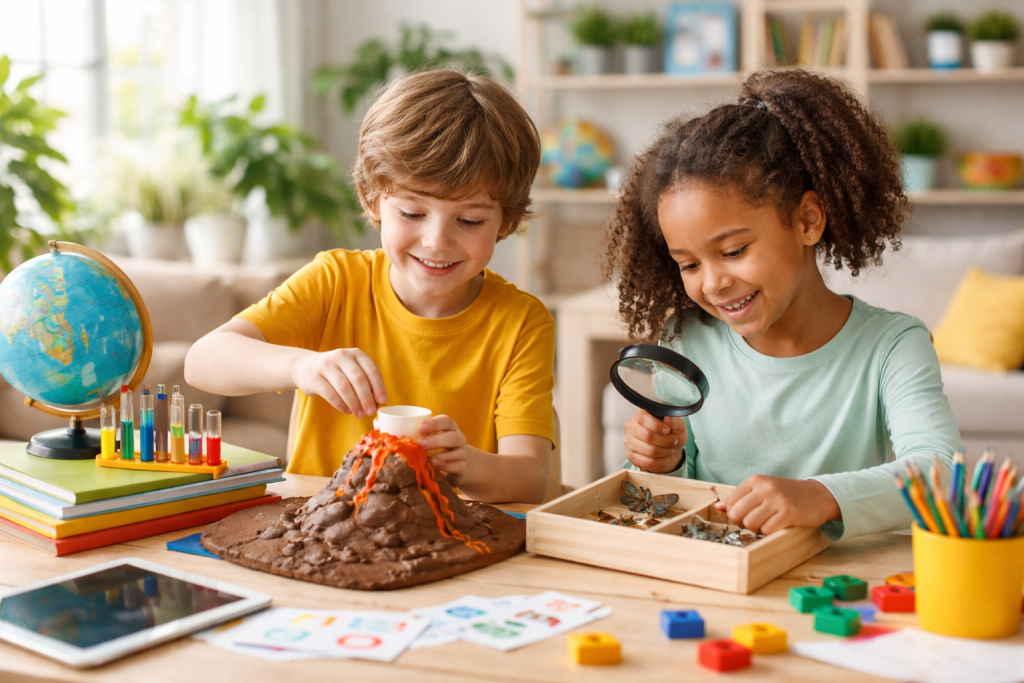
Math flashcard games are dynamic activities that utilise flashcards, typically featuring a math problem on one side and its answer on the other, to practise and reinforce mathematical skills. They move beyond rote memorisation, encouraging quick recall, problem-solving, and strategic thinking in an engaging format. From basic additions to more complex algebra, flashcards offer a tangible and interactive way to grapple with numbers.
Contents
- 1 The Foundation of Math Skill Building
- 2 Beyond Memorization: Fostering Fluency
- 3 Enhanced Engagement and Motivation
- 4 Improved Recall and Retention
- 5 Development of Critical Thinking and Problem-Solving Skills
- 6 Flashcard War
- 7 Around the World
- 8 Speed Rounds and Timed Challenges
- 9 Math Scavenger Hunt
- 10 Flashcard Bingo
- 11 Build a Tower (or Robot, or Monster)
- 12 Early Childhood (Preschool-Kindergarten)
- 13 Elementary School (Grades 1-5)
- 14 Middle School (Grades 6-8)
- 15 Online Flashcard Platforms and Apps
- 16 Interactive Whiteboards and Projectors
- 17 Introduce Rewards and Incentives
- 18 Encourage Personalization and Creativity
- 19 Incorporate Movement and Active Play
- 20 Warm-Ups and Bell Ringers
- 21 Differentiated Instruction and Small Group Work
- 22 Review and Reinforcement
- 23 Visual Learners
- 24 Auditory Learners
- 25 Kinesthetic Learners
- 26 Online Educational Websites
- 27 Books and Activity Guides
- 28 DIY Flashcard Creation
The Foundation of Math Skill Building
At its core, mathematical proficiency hinges on a solid understanding of fundamental operations and concepts. Flashcard games provide a repetitive yet varied context for mastering these basics. The act of confronting a problem, recalling a solution, and verifying it helps to embed mathematical facts firmly in a learner’s mind.
Beyond Memorization: Fostering Fluency
While memorisation has its place, true mathematical fluency involves more than just knowing facts; it’s about applying them quickly and confidently. Flashcard games, particularly those with a timed element or competitive aspect, naturally encourage this swift recall, improving mental agility and preparing students for more complex mathematical reasoning where quick calculations are essential building blocks.
The advantages of incorporating math flashcard games into a learning routine are numerous, extending beyond mere academic improvement to encompass broader cognitive and emotional development.
Enhanced Engagement and Motivation
Games naturally captivate attention. When maths is presented as a game, learners are more likely to be engaged, curious, and motivated to participate. This shifts their perception of math from a daunting subject to an enjoyable activity, reducing anxiety and increasing a willingness to learn. The sense of achievement derived from solving a problem or winning a round serves as a powerful motivator for continued effort.
Improved Recall and Retention
The repeated exposure to problems and solutions inherent in flashcard games significantly strengthens memory. Each time a card is processed, neural pathways are reinforced, making it easier for learners to retrieve information quickly and accurately. This repetitive practice, especially when interspersed with playful elements, leads to better long-term retention of mathematical facts and procedures.
Development of Critical Thinking and Problem-Solving Skills
Many flashcard games aren’t simply about recalling facts; they often involve strategic thinking. Learners might need to decide which card to play, anticipate an opponent’s move, or calculate combinations. This fosters critical thinking and problem-solving skills as they learn to analyse situations and devise effective strategies, all within a mathematical context.
The beauty of maths flashcards lies in their simplicity, allowing for a wide array of engaging activities that have stood the test of time.
Flashcard War
A perennial favourite, Flashcard War draws inspiration from the classic card game. In this version, two players each draw a flashcard. They both calculate the answer to their card, and the player with the higher (or lower, if desired for variation) correct answer wins both cards. This continues until one player has all the cards, or a set time limit is reached. It’s an excellent way to practise quick mental arithmetic under a competitive yet friendly pressure.
Around the World
This fast-paced game is ideal for a group setting. Students sit in a circle, and one student stands behind another. The teacher holds up a flashcard, and the first of the two students to correctly answer the problem moves on to stand behind the next student. The goal is to make it “around the world” and return to one’s starting seat. This game thrives on quick thinking and rewards immediate recall.
Speed Rounds and Timed Challenges
For individual practice or small groups, timed challenges add an exciting element. The learner presents a stack of flashcards and competes with the clock to answer as many as possible within a predetermined timeframe, typically one minute. Progress can be tracked over time, allowing learners to see their improvement and strive for personal bests. This method builds confidence and strengthens speed and accuracy.
Beyond the traditional games, flashcards can be incorporated into more imaginative and interactive play, transforming the learning experience.
Math Scavenger Hunt
Turn your living space or classroom into a mathematical adventure. Hide flashcards around the room, each leading to the next with a correct answer, or simply require students to find and answer a certain number of cards. This movement-based activity provides a refreshing change from stationary learning and adds an element of discovery to maths practice.
Flashcard Bingo
Create Bingo cards with answers to various flashcard problems. As flashcards are called out, players solve the problem and mark the corresponding answer on their Bingo card. The first one to get a Bingo win. This game reinforces fact families and improves recognition of sums, differences, products, or quotients.
Build a Tower (or Robot, or Monster)
For younger learners, connect math problems to a creative building activity. Each time a child correctly answers a flashcard, they receive a building block or a piece to add to a creature drawing. The goal is to complete the tower or creature. This combines fine motor skills and creative expression with mathematical practice, making learning feel less like work and more like play.
Tailoring flashcard games to the developmental stage of learners is key to maximising their effectiveness and enjoyment.
Early Childhood (Preschool-Kindergarten)
For the youngest learners, flashcard games should focus on foundational concepts such as number recognition, counting, and simple addition/subtraction within 10. Games like “Match the Number”, where children match a number flashcard to a corresponding group of objects, or “Counting Train”, where they put flashcards in numerical order, are ideal. The emphasis should be on hands-on manipulation and visual reinforcement.
Elementary School (Grades 1-5)
As children progress, flashcards can be used to master basic arithmetic operations (addition, subtraction, multiplication, and division). Games involving speed, such as “Flashcard Relay Race”, where teams compete to solve a series of problems, or “Fact Family Match-Up”, help reinforce interconnected mathematical concepts. Introducing fractions and decimals on flashcards can also begin at the later elementary levels in a game context.
Middle School (Grades 6-8)
Middle schoolers can tackle more complex topics like integers, exponents, algebraic expressions, and geometry formulas using flashcards. Games can involve matching equivalent expressions, solving simple equations, or identifying geometric shapes and their properties. Collaborative games where students work together to solve a complex problem on a flashcard can be particularly effective for this age group, fostering teamwork alongside maths skills.
While traditional flashcards have their charm, technology offers exciting new avenues for enhancing flashcard-based learning.
Online Flashcard Platforms and Apps
Numerous websites and mobile applications offer digital flashcards, often with built-in game modes. Platforms like Quizlet, Kahoot!, and various math apps allow users to create customised sets of flashcards, engage in timed quizzes, and play interactive games that track progress. These digital tools often include audio, visual aids, and instant feedback, catering to different learning preferences.
Interactive Whiteboards and Projectors
In a classroom setting, interactive whiteboards or projectors can display digital flashcards on a large screen, allowing for whole-class participation. Teachers can use stylus pens to write answers, or students can come up to the board to solve problems collaboratively. This creates a dynamic and shared learning experience, making flashcard games more visible and communal.
The goal is to infuse joy into mathematical practice. Several strategies can help achieve this.
Introduce Rewards and Incentives
Small, non-monetary rewards can significantly boost engagement. This could be anything from extra free time, a sticker, choosing the next game, or even just public recognition and praise. The key is to make the reward meaningful to the learner. Focusing on effort and improvement rather than just winning can also encourage intrinsic motivation.
Encourage Personalization and Creativity
Allowing learners to design or decorate their flashcards can increase their sense of ownership and investment in the learning process. They might draw pictures related to the problems, use different colours, or even create their own math challenges. This creative outlet makes the learning experience more personal and memorable.
Incorporate Movement and Active Play
Sitting still for long periods can diminish enthusiasm. Integrate physical activity into flashcard games. For instance, after solving a card, a child might have to jump five times or run to a specific spot in the room. This not only burns off energy but also helps to make the learning experience more dynamic and engaging, especially for kinaesthetic learners.
Flashcard games are incredibly versatile resources for educators to enhance their maths curriculum.
Warm-Ups and Bell Ringers
Begin each maths lesson with a quick flashcard game. This serves as an excellent warm-up activity, getting students’ minds ready for mathematical thinking and reviewing previously learned concepts. A five-minute “Flashcard Blitz” can quickly assess prior knowledge and mentally prepare students for new material.
Differentiated Instruction and Small Group Work
Flashcards are perfect for differentiated instruction. Teachers can create different sets of flashcards tailored to various skill levels within the classroom. During small group work, students can practise at their own pace, with the teacher providing targeted support to groups or individuals as needed. This ensures that every student is challenged appropriately.
Review and Reinforcement
Flashcard games are indispensable tools for reviewing concepts before quizzes or tests. They provide a low-stakes, interactive way for students to solidify their understanding and identify areas where they might need further practice. By making review fun, it reduces test anxiety and builds confidence.
Recognising that every learner is unique, adapting flashcard games to cater to diverse learning styles is crucial for inclusive education.
Visual Learners
For visual learners, flashcards that incorporate vibrant colours, pictures, or diagrams are highly effective. Using flashcards with images of groups of objects for counting, or geometric shapes for properties, helps them form mental representations of mathematical concepts. They might also benefit from watching demonstrations of flashcard games before participating.
Auditory Learners
Auditory learners thrive when they can hear information and articulate their thoughts. Flashcard games that involve verbally calling out answers, explaining solutions to a partner, or even chanting math facts can be very beneficial. Group discussions about strategies and common errors during flashcard games also appeal to their learning style.
Kinesthetic Learners
Kinaesthetic learners learn best through movement and hands-on activities. Games that require physical manipulation of flashcards, such as sorting them into categories, physically moving around a game board, or incorporating actions like jumping or clapping for correct answers, will engage them more effectively. Flashcard scavenger hunts or building activities are particularly well-suited for this group.
A wealth of resources exists to assist parents and educators in discovering and creating engaging maths flashcard games.
Online Educational Websites
Websites like Teachers Pay Teachers, Education.com, and specific math learning platforms often host a vast collection of printable flashcards and game ideas. Many offer free resources, while others provide premium content created by experienced educators. These sites are excellent starting points for themed flashcards or specific curriculum alignment.
Books and Activity Guides
Libraries and bookshops are treasure troves of educational resources. Many books are dedicated to math games, including those featuring flashcards, providing detailed instructions, variations, and tips for implementation. These guides often offer a broader pedagogical context, explaining the ‘why’ behind the ‘what’.
DIY Flashcard Creation
Sometimes, the best resources are those you create yourself. Blank index cards, markers, and a little creativity are all that’s needed to craft personalised flashcards. This allows for tailoring problems to specific learning needs or interests, incorporating inside jokes or thematic elements that resonate with the learners, making the learning experience truly unique and meaningful.
Emma Carter is an early childhood education enthusiast and content creator at Edyzoa. She is passionate about helping children learn through fun, engaging, and safe educational resources that support creativity, curiosity, and skill development.